








Published: March 20, 2026
Updated: March 20, 2026

Quick Summary
Your average deal size directly impacts revenue growth and profitability. But most sales teams never calculate it, or worse, they calculate it wrong. In this guide, you'll learn the exact formula to measure your average deal size, what the number really tells you, and seven proven strategies to increase it.
Think Your Sales Team Is Closing Enough Deals?
You may have to think twice because that might not be the whole story.
The truth is: You could be hitting quota every month while still leaving serious money on the table. The difference often comes down to one metric most sales leaders overlook: Average Deal Size.
For example, two sales teams can close the same number of deals, say 7, but if one team's average deal is $15,000 and the other's is $25,000, the second team generates 67% more revenue with the same effort. That's the difference between struggling to scale and growing profitably.
The good news? Increasing your average deal size doesn't require hiring more reps or working longer hours. It requires an understanding of what drives deal value.
In this article, we'll break down what average deal size really means, how to calculate it accurately, and most importantly, how to increase it with proven strategies that work.
Why Listen to Us?
At Proposify, we've helped over 8,000 B2B sales teams close higher-value deals by transforming how they present, track, and follow up on proposals. Our platform processes millions in proposal value every month, giving us unique visibility into what separates winning proposals from losing ones and, more importantly, what separates average deals from exceptional ones.
What Is Average Deal Size?
Average Deal Size (ADS), also known as average contract value, is a key sales metric that measures the revenue you typically generate per closed deal over a given period.
It is simply the average amount of money a business earns per deal it closes.
For B2B sales teams, average deal size reveals critical insights about sales performance, customer targeting, and revenue potential. It tells you whether your team is selling to the right customers, positioning value effectively, and maximizing every opportunity.
How to Calculate Your Average Deal Size
To calculate your average deal size, you need the total revenue from closed deals during a period and the total number of deals closed in that same period. You can also calculate your average deal size annually, quarterly, or weekly, depending on your business model and sales cycle length.
Use this formula to calculate your average deal size:
Average Deal Size = Total Revenue from Closed Deals ÷ Number of Closed Deals
Say you run a B2B marketing agency and launch a new content service in Q4. You close 24 deals across four pricing tiers: basic ($5,000), standard ($12,000), premium ($25,000), and enterprise ($45,000).
At the end of the quarter, you calculate your average deal size to understand how customers responded to your pricing structure. You learn that your 24 deals generated $336,000 in total revenue.
($336,000 ÷ 24) = average deal size
$336,000 ÷ 24 = $14,000
In Q4, your average deal size was $14,000.
How to Interpret Your Average Deal Size
There's no universal 'benchmark' for average deal size because it varies by industry, business model, and customer segment. A $5,000 deal might be excellent for a freelance consultant but disappointing for an enterprise software company.
To put this into context, research shared by Jason Lemkin, founder of SaaStr, shows that average deal sizes vary significantly across SaaS verticals, from SMB-focused tools to enterprise platforms. The takeaway is simple: benchmarks only matter when they’re relevant to your market.
Instead of chasing arbitrary benchmarks that are valued on different factors, focus on these three comparisons:
- Compare to your historical data: Is your average deal size trending up or down quarter over quarter? Consistent growth indicates improvement.
- Compare to Customer Acquisition Cost (CAC): Your average deal size should be at least 2x-3x your CAC for sustainable profitability. If it's not, you're either spending too much to acquire customers or not capturing enough value per deal.
- Compare across sales segments: Break down average deal size by rep, region, industry vertical, or customer size. This reveals where you're winning and where you need improvement.
Note that your average deal size only makes sense in context. A dip isn’t always a problem. It can signal a strategic move into smaller segments. A rise may reflect growing adoption of a premium offer. Always segment by product, customer type, and sales channel. What looks like a decline overall may be a win in the segments that matter.
Why Average Deal Size is a Critical Metric for Revenue Growth
Of all the sales metrics you can track, average deal size is among the most actionable. Here's why it deserves your attention:
1. It Reveals Your True Revenue Potential
Total revenue is important, but it doesn't tell you how you're generating that revenue. Are you closing 100 small deals or 20 large ones? The path to the same revenue number looks completely different depending on your average deal size. A higher average deal size means you can hit revenue targets with fewer deals and improved sales velocity.
2. It Exposes Pricing and Positioning Issues
A declining average deal size is often the first signal that something's wrong with your sales process. Maybe your reps are discounting too aggressively, or maybe they're targeting the wrong customer segment. Tracking average deal size helps you spot these issues early, before they become major revenue problems.
3. It Impacts Sales Efficiency and Profitability
Did you know it takes roughly the same amount of effort to close a $10,000 deal as it does to close a $50,000 deal? Same discovery calls, same proposal creation, same follow-ups.
When your average deal size increases, you're generating more revenue without proportionally increasing costs.
4. It Helps You Forecast Revenue More Accurately
Sales forecasting becomes significantly more reliable when you understand your average deal size trends. If you know your team closes an average of $20,000 per deal and you have 15 qualified opportunities in your pipeline, you can project $300,000 in potential revenue with reasonable confidence.
7 Tips to Increase Your Average Deal Size
Now that you understand what average deal size means and how to measure it, let's focus on strategies that actually work to increase it.
1. Bundle Products and Services Strategically
Bundling is one of the most effective tactics for increasing deal value without requiring a hard sell. Instead of selling individual products, create packages that solve complete problems.
For example, rather than selling just a software license, bundle it with implementation services, training, and premium support. The perceived value increases dramatically, and customers are more willing to pay premium prices for comprehensive solutions.
The key is to bundle complementary offerings that genuinely make sense together. When done well, customers see it as getting everything they need in one purchase.
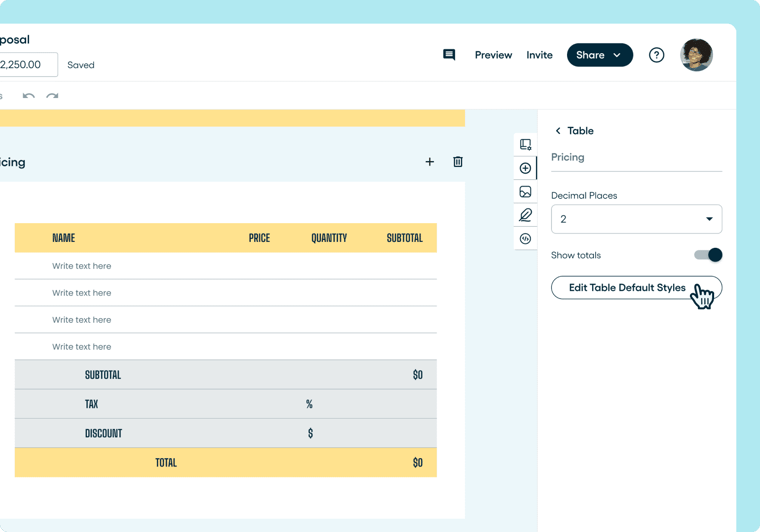
That's why we recommend using Proposify's interactive pricing tables to make bundling frictionless. Create optional add-ons that prospects can choose.
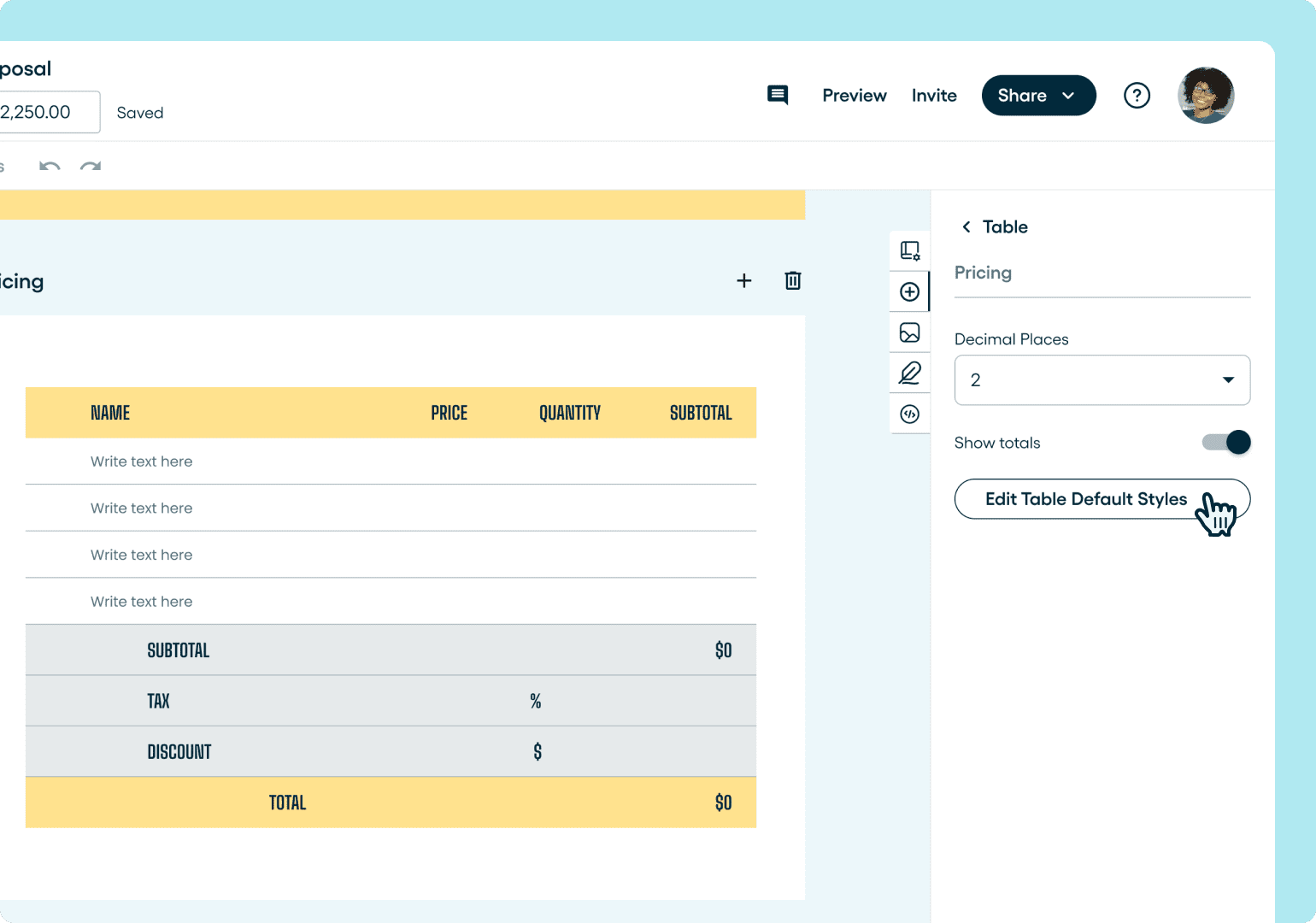
For a detailed visual walkthrough, refer to the Creating Pricing Tables guide below:
2. Introduce Tiered Pricing to Anchor High-Value Options
Sales psychology matters more than most sales leaders realize. Especially when it comes to pricing, when prospects see three options—basic, standard, and premium—they rarely choose the cheapest one. Most gravitate toward the middle option, perceiving it as the "safe" choice.
Kylie Racki, CEO of Proposify, had this to say about tiered pricing:
“When prospects see only one option, they have a binary choice: yes or no. And when money feels tight, "no" is the safer answer. ‘’Here's what changes the game’’ he wrote: ‘’Give them options. Use a good-better-best model. The top tier acts as anchor pricing - it makes your middle and lower packages feel more affordable by comparison.’’
By introducing a premium tier (even if few customers buy it), you make your standard offering look more reasonable and increase the likelihood of prospects choosing higher-value packages.
3. Leverage Proposal Analytics to Understand Buyer Behavior
You can't improve what you don't measure, and most sales teams are flying blind when it comes to proposal performance.
Traditional PDFs offer zero visibility into how prospects engage with your proposals. Did they read it? Which sections did they focus on? Did multiple stakeholders review it?
This is where proposal software transforms your approach. We recommend using a tool like Proposify to access real-time insights into proposal engagement:
- See exactly when prospects open your proposal and how long they spend reviewing it
- Track which sections get the most attention (pricing, case studies, technical specs)
- Identify when multiple stakeholders are reviewing the proposal, signaling buying committee involvement
- Get alerts when proposals are reopened after going dormant
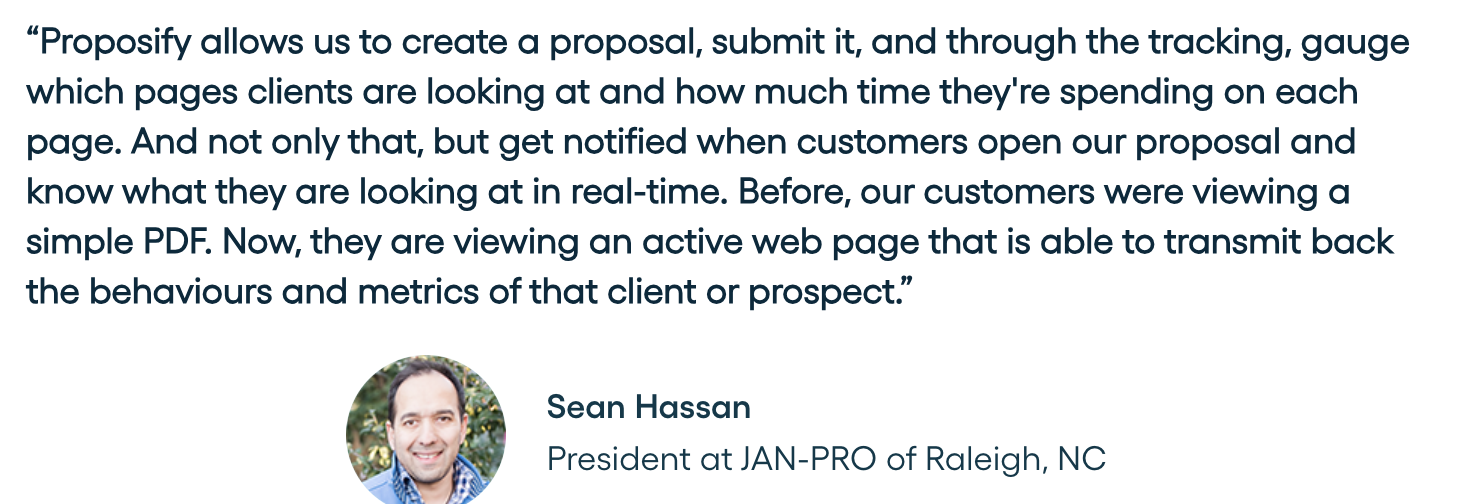
These insights tell you when to follow up and what to focus on in your conversations. If a prospect spends 10 minutes on your premium pricing tier, that's your signal to emphasize those features in your next discussion.
4. Upgrade Your Proposal Quality and Presentation
Here's an uncomfortable truth: if your proposals look cheap, prospects assume your solution is cheap too.
Professional, polished proposals signal value and justify premium pricing. Interactive proposals with clear sections, compelling visuals, and seamless navigation create confidence that static Word docs and PDFs simply can't match.
This is where Proposify becomes a game-changer for teams serious about increasing average deal size.
According to our latest State of Proposals Report, which analyzes over 1.3 million proposals across 27 industries, companies using Proposify’s proven proposal best practices achieve close rates of 36%—significantly higher than the industry average of 20%.
Instead of cobbling together proposals in Word or Google Docs, Proposify lets you create branded, interactive proposals that:
- Showcase your professionalism from the moment prospects open the link
- Include interactive pricing tables that let prospects explore different options
- Integrate video content to tell your story more compellingly than text alone
- Enable e-signatures so prospects can accept on the spot
You can use Proposify's proposal templates designed specifically for your industry. These templates incorporate best practices from thousands of winning proposals, ensuring your presentation matches the deal size you're targeting
5. Create Urgency Without Being Pushy
‘’Salespeople: One of the WORST things you can do is SKIP quantifying the "cost of inaction." It helps you justify spending and build urgency.’’, says Chris Orlob, Founder of Pclub.io.
What he means is that deals that drag on for months tend to shrink. As prospects overthink decisions, they often talk themselves down to smaller packages or request discounts "just to get something signed."
Creating appropriate urgency helps close deals at full value. This means giving them legitimate reasons to move forward now rather than later.
Use these urgency tactics:
- Limited-time pricing on premium tiers
- Bonus services for deals closed by a specific date
- Seasonal promotions tied to budget cycles or fiscal year-end
- Implementation timelines that favor faster decisions
Frame urgency around the cost of inaction: "Every month you wait to implement this solution, you're losing $X in potential revenue. Let's get you live by Q2."
6. Upsell While They're Buying, Not After
Most sales teams treat upselling as a post-sale activity. They close the initial deal, then try to expand later. This leaves immediate revenue on the table.
The most effective upselling happens before the contract is signed. During the discovery and proposal stages, you understand their full scope of needs.
The key is identifying expansion opportunities early. Not after the deal closes.
For example, if a prospect initially requests a basic package for their marketing team, ask:
"You mentioned sales also struggle with proposal consistency. If we extended this to your sales team now, you'd solve both problems in one implementation. That's typically 40% cheaper than adding sales later."
This positions the upsell as a practical consolidation rather than an aggressive add-on. Prospects see the logic. The deal size increases because you're solving their complete problem, not just the piece they initially identified.
7. Improve Sales Qualification to Focus on Higher-Value Opportunities
The fastest way to increase average deal size is to stop wasting time on prospects who can't afford your solution.
How do you do it? Become strategic about where your team invests its energy. If your average deal is $20,000, pursuing a $3,000 opportunity with the same intensity as a $50,000 opportunity may look like poor resource allocation.
So what do you do before you qualify prospects? Train your team to ask budget-related questions upfront without apologizing, as this helps to save everyone time.
When you focus on prospects with the budget and authority to close larger deals, your average deal size increases.
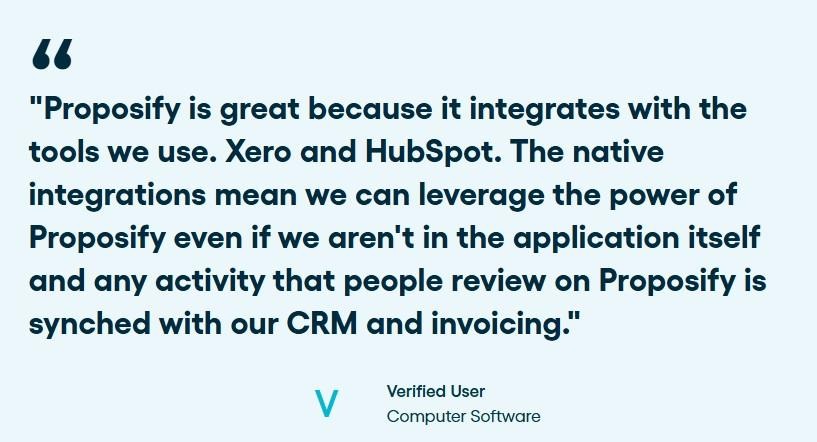
This is where Proposify's CRM integrations come into play. With it, you can pull qualification data directly from Salesforce or HubSpot into your proposals. Budget, decision-makers, and timeline appear automatically. No manual data entry. No missed signals. Your team sees which opportunities justify premium proposals before investing hours building them.
Increase Your Average Deal Size With Proposify
Average deal size is a direct lever for revenue growth and profitability. By calculating it consistently and implementing the strategies in this guide, you can increase deal values without burning out your sales team.
The most impactful change you can make is upgrading how you present and track proposals. Professional, data-driven proposals position your offering as premium and give you the insights needed to close deals at full value.
Proposify makes it easier with interactive proposal templates, real-time analytics, and seamless CRM integrations that keep your entire sales process aligned. See how sales teams are using Proposify to close larger deals faster. Get started with Proposify.