







Published: October 9, 2026
Updated: October 9, 2026

Quick Summary
Proposal software helps solar installers save time and reduce costly errors. Choosing the best solar proposal software comes down to where your workflow slows down most. Proposify, Solargraf, and Aurora are the top platforms for teams in 2026. Proposify stands out for its fully custom templates, real-time engagement tracking, and design flexibility that other platforms cannot match.
Shortlist
|
# |
Software |
Best For |
|
1 |
Proposify |
Solar sales teams that need to create, send, and track on-brand proposals at scale |
|
2 |
Solargraf |
Installers looking for design, proposals, and permitting in one place |
|
3 |
Aurora |
Proposals that require advanced solar modeling |
Is Your Current Solar Proposal Process Slowing You Down?
Manually creating solar proposals takes time your team does not have. From calculating energy savings to chasing approvals and rebuilding documents from scratch, manual proposal processes can cost you opportunities.
Solar proposal software speeds up the process and helps you close more sales with confidence. To help you find the best fit, we’ve compared the eight best solar proposal software platforms in 2026, with Proposify leading the pack for sales teams that need speed, consistency, and control.
Let’s dive in.
Why Listen to Us?
For almost two decades, Proposify has helped over 8,000 customers accelerate their pipeline. With our platform, sales teams like BluSky and Paradox enjoy a close rate twice the industry average, and generate proposals in less than 17 minutes. So, you can trust that this list is based on our real experience and industry insight.
Benefits of Using Specialized Software for Solar Proposals
Specialized solar proposal software simplifies your sales process and improves team efficiency. Here’s how:
1. Save Time and Increase Productivity
Building solar proposals manually takes time, especially when you’re handling calculations, pricing updates, and revisions for every client. Proposal software automates much of the process, so your team can focus more on selling and less on administrative work.
2. Reduce Costly Errors
Solar proposals are complex. Calculations, rebates, financing, and system configurations all leave room for error. A small pricing mistake or outdated figure can hurt your credibility and stall a deal. Specialized proposal software helps keep everything accurate by using pre-built templates, automated pricing, and centralized data.
3. Standardize Branding Across Proposals
Consistency matters when presenting proposals to clients. Different layouts, fonts, or messaging across proposals can make your business appear unorganized or less professional. Proposal software helps standardize branding by keeping logos, colors, templates, and formatting consistent across every proposal your team creates.
4. Create a More Engaging Client Experience
Interactive proposals allow clients to explore options, review pricing, and better understand the value of the system being presented. Some platforms also provide insights into how clients interact with proposals, helping sales teams personalize follow-ups based on client interest and engagement.
5. Gain Better Visibility Into the Sales Process
Without visibility into proposal activity, it’s difficult to know how engaged a prospect really is. Proposal software provides real-time notifications and analytics, showing when proposals are opened, viewed, or shared. This helps sales teams to stay informed throughout the sales cycle and make more strategic follow-up decisions.
The 8 Best Solar Proposal Software for Teams in 2026
Here’s a quick look at the 8 best solar proposal software platforms on the market.
|
# |
Software |
Best For |
Key Features |
Starting Price |
|
1 |
Proposify |
Solar sales teams that need to create, send, and track on-brand proposals at scale |
Interactive proposal builder, AI-powered templates, visual proposal tools |
Starting at $35/user/mo (annual) |
|
2 |
Solargraf |
Installers looking for design, proposals, and permitting in one place |
AI-powered solar design, live proposal editing |
$2,799/year |
|
3 |
Aurora |
Advanced solar modeling and proposals |
Reliable shading analysis, interactive proposals |
$159/user/month |
|
4 |
HelioScope |
Commercial and industrial (C&I) solar projects |
Flexible design tools, detailed shading analysis |
$159/license/month |
|
5 |
Sunbase |
Contractors managing solar, roofing, and construction projects |
Custom proposal generation, built-in estimation tools |
$59/user/month |
|
6 |
OpenSolar |
Solar teams looking for a free all-in-one platform |
AI-powered design and proposals, built-in CRM |
Free |
|
7 |
Energy Toolbase |
Commercial solar and storage financial modeling |
Financial analysis tools, energy storage simulation |
$170/user/month |
|
8 |
SurgePV |
Installers and EPCs looking for AI-assisted workflows |
Smart proposal design, shadow analysis |
$1,299/user/year |
1. Proposify

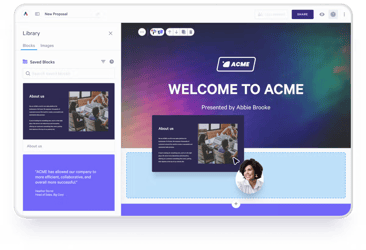
Proposify helps solar businesses create interactive sales proposals that help move deals forward faster. Its intuitive interface and customizable templates make it easy to build proposals without spending hours on manual formatting.
You can add videos, interactive pricing tables, financial projections, system designs, and energy savings calculations directly into your proposals. Whether you work with residential or commercial clients, Proposify gives you the flexibility to tailor proposals to each customer’s needs.
Proposify’s real-time proposal tracking helps sales teams see when prospects open proposals, which sections they review most, and base follow-up decisions on engagement data, rather than guesswork.
Key Features
- Interactive Proposal Builder: Design polished, on-brand proposals with a drag-and-drop editor that gives your team full creative control without relying on design support.
- AI-Powered Templates: Choose from pre-built industry-specific templates, generate new ones with AI, and customize every detail to match your brand and each client's needs.
- Visual Proposal Tools: Embed videos and interactive pricing tables in proposals so clients can visualize your solution and adjust selections in real time.
- Role-Based Permissions: Lock pricing, terms, and brand elements by role so every proposal that goes out is accurate, compliant, and on-brand.
- Real-Time Proposal Tracking: See when clients open your proposal, which sections they engage with, and how long they spend on each part.
- Built-In E-Signatures: Clients can sign directly on the proposal, speeding up the deal-closing process.
Pricing
Proposify offers three plans
- Build: $35 per user per month, billed annually, or $49 per user per month, billed quarterly. Includes a content library, document insights, integrations, and e-signatures.
- Grow: $3,900 per year for five seats. Adds approval workflows, user permissions, account metrics, and API access.
- Scale: $12,800 per year for 10 seats. Adds premium integrations, SSO, multiple workspaces, and premium onboarding.
A 14-day free trial is available with no credit card required.
Pros
- Fully customizable proposal templates that keep every proposal on-brand and consistent
- Detailed engagement analytics that give you full visibility into how clients interact with your proposals
- Automatic CRM sync with Salesforce, HubSpot, and other tools so client data flows directly into proposals
- Mobile-friendly proposals that clients can review and sign on any device
- Responsive human support available across all plans
- Transparent, predictable pricing with no hidden costs
Cons
- Pricing may be a concern for small solar teams with tight budgets
2. Solargraf

Solargraf brings solar design, proposals, and permitting together in one platform. It helps teams move faster from design to installation, without the usual back-and-forth.
Key Features
- AI-Powered Solar Design: Quickly model solar systems with accurate configurations.
- Live Proposal Editing: Adjust proposals in real time to meet client needs.
- Automated Permitting: Generate compliant permit packages without manual work.
- Interactive Pricing Tables: Clients can select options and see real-time pricing updates.
Pricing
Solargraf offers four plans:
- Starter Plan: Starts at $2,799/year and is recommended for teams handling around 240 projects in a year with 2 users.
- Small Business Plan: Costs $4,799/year and is recommended for teams handling around 480 projects in a year with 4 users.
- Teams Plan: Costs $6,399/year and is recommended for teams handling around 720 projects in a year with 6 users.
- Enterprise Plan: Starts at $12,999/year and is recommended for teams handling around 1,500 projects per year.
Pros
- AI-powered tools that speed up system design
- Real-time editing for easy customization of proposals
- Automated permitting reduces manual tasks
- CRM integrations for improved workflow efficiency
- Mobile-friendly experience for clients and sales teams
Cons
- Advanced features may feel overwhelming for smaller teams
- Interface can take time to learn
- Pricing may be expensive for startups or small businesses
3. Aurora
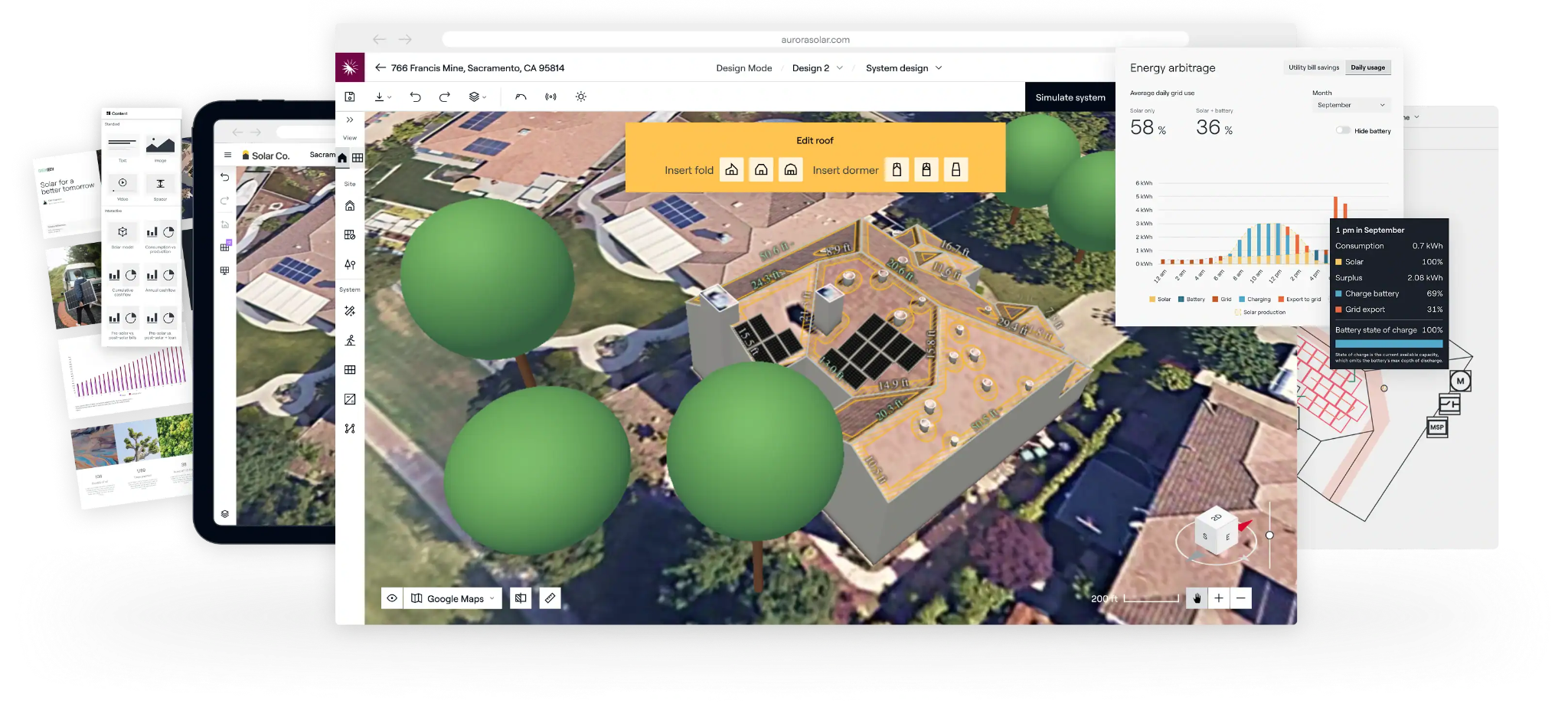
Aurora is a cloud-based platform for solar design, sales, and delivery. It helps solar professionals create data-driven proposals for residential and commercial projects. The platform handles complex designs well. Some teams, however, find the platform difficult to navigate.
Key Features
- Reliable Shading Analysis: Evaluate the shading impact on system performance using validated calculation engines.
- Interactive Proposals: Clients can visualize pricing adjustments and system performance in real time.
- Detailed Roof Imagery: Visualize designs with high-definition Nearmap imagery and LIDAR shading data.
- AI-Powered Design: Quickly generate accurate 3D roof models and system configurations using Aurora's AI modeling software.
Pricing
There are three plans available for users:
- Basic Plan ($159/user/month): Includes tablet-friendly proposals, HD imagery, and advanced design tools.
- Premium Plan ($259/user/month): Adds LIDAR-assisted modeling, bankable shade reports, and battery storage modeling.
- Enterprise Plan (Custom): Includes advanced integrations, unlimited users, and premium support.
Pros
- Accurate energy modeling for complex projects
- Generates bankable reports using advanced shading analysis
- Interactive proposals that improve the client experience
- Supports larger teams thanks to real-time collaboration
- Includes customizable templates for different project types
Cons
- Could be expensive for smaller businesses
- Advanced tools can feel overwhelming for new users
- Limited engagement tracking compared to some competitors
4. HelioScope
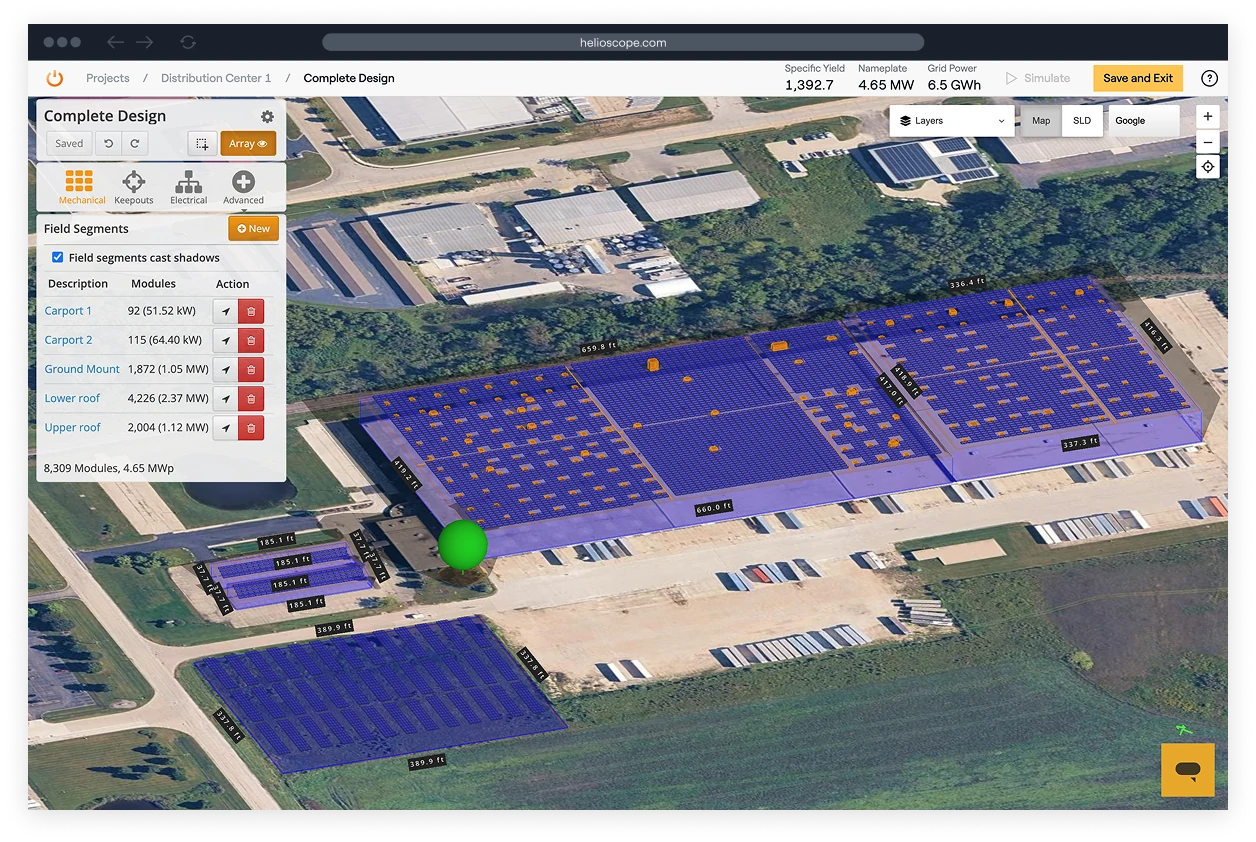
HelioScope combines solar PV design, simulation, financial modeling, and proposal tools under a single platform. It is a strong fit for complex commercial and industrial solar projects. However, it is not a complete solution. Post-design work, such as mounting profiles and single-line diagrams, still requires separate platforms.
Key Features
- Flexible Design Tools: Create accurate solar designs using LIDAR, Independent Tilt, and Parcels.
- Detailed Shading Analysis: Optimize layouts and analyze shading impact with detailed reports.
- Financial Modeling: Create proposals with built-in financial analysis tools.
- Bankable Simulations: Generate production estimates aligned closely with PVsyst.
Pricing
There are three plans available:
- Basic Plan: Includes foundational solar PV design and simulation tools. Starts at $159/license/month or $1,620/year.
- Pro Plan: Costs $259/license/month or $2,640/year, and adds LIDAR-assisted modeling, AI-based obstruction detection, and financial proposal tools.
- Enterprise Plan: Pricing is custom. It includes unlimited users, API access, SSO, and advanced team management features.
Pros
- Fast and easy-to-use interface
- Accurate production simulations for complex projects
- Flexible design tools for different installation types
- Strong shading analysis and reporting capabilities
- Makes it easy to compare multiple system layouts
Cons
- Subscription model means costs rise exponentially as users increase
- Limited capacity for utility-scale projects
- Not ideal for businesses looking for an all-in-one post-design engineering solution
5. Sunbase
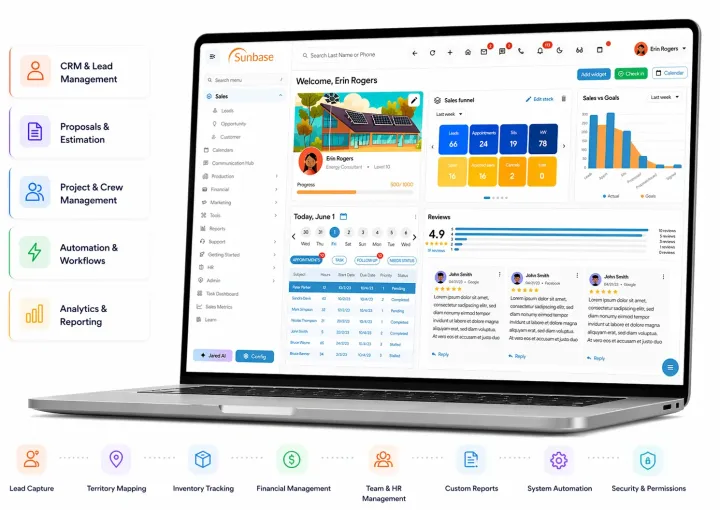
Sunbase is a contractor management platform that centralizes CRM, proposal generation, project estimation, and project management in one system. It is a strong option for solar installers, roofing contractors, and construction firms looking to replace multiple disconnected tools. That said, it lacks the design depth and simulation accuracy that more technical teams typically require.
Key Features
- Custom Proposal Generation: Create professional solar proposals using custom templates that include panel layouts, production estimates, and financial projections.
- Built-In Estimation Tools: Accurately calculate labor, equipment, and installation costs within the platform.
- Real-Time Business Insights: Monitor revenue, project performance, and team productivity through live dashboards and contractor reporting tools.
- Customer Communication Tracking: Keep proposal revisions and customer conversations organized.
Pricing
Sunbase plans start at $59/user/month. Custom pricing is available depending on team size and feature requirements.
Pros
- Combines CRM, proposals, and project management in one platform
- Good for contractor workflows
- Makes proposal creation and project coordination easier
- Includes estimating and scheduling tools alongside proposals
- Good fit for teams managing high proposal volume
Cons
- Interface may feel overwhelming for smaller teams
- Not ideal for advanced solar modeling
- Some businesses may not need the full all-in-one feature set
6. OpenSolar
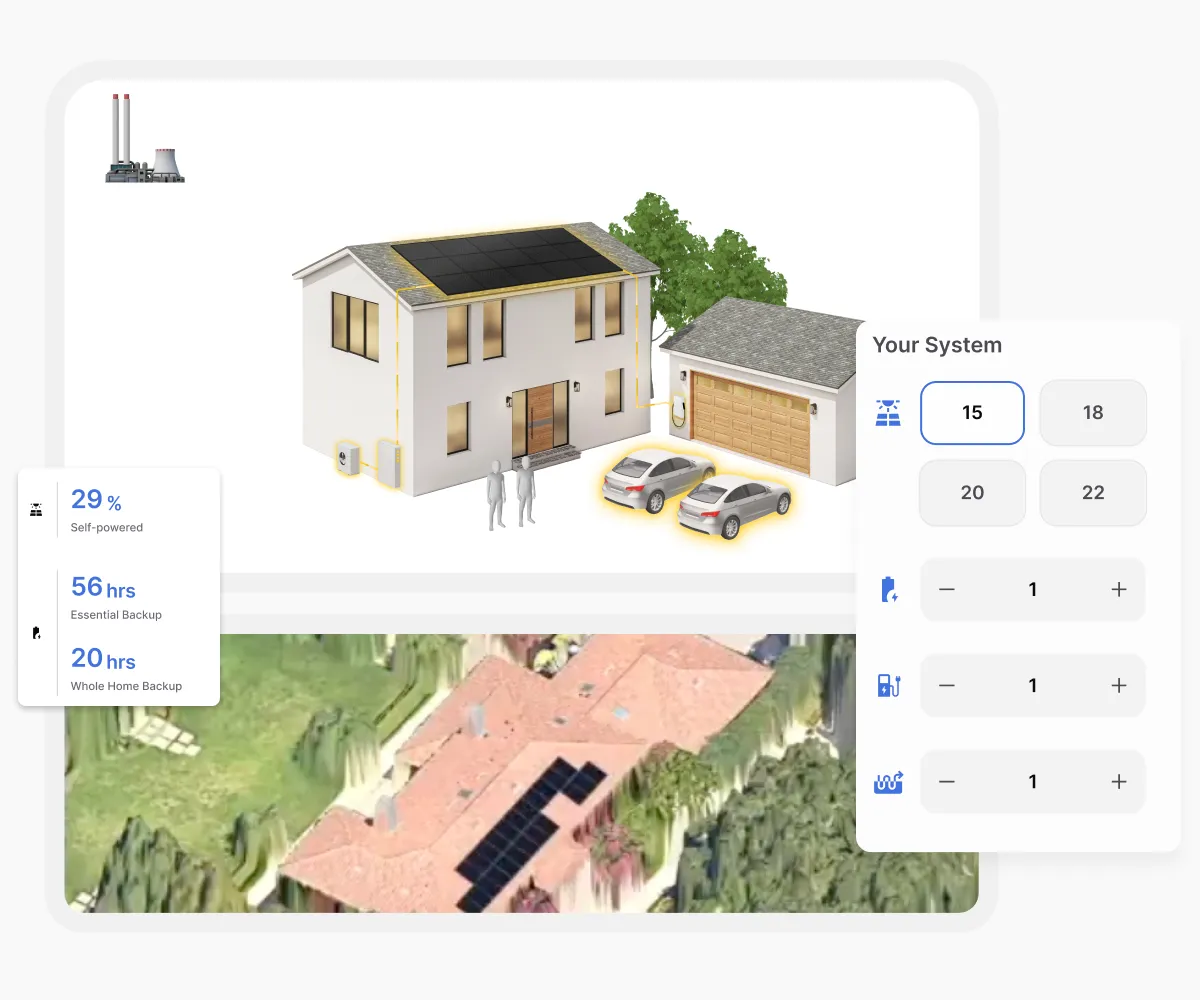
OpenSolar is a free all-in-one platform for solar design, proposals, CRM, and project management. It works well for teams on a tight budget that need to move quickly from lead generation to customer-ready proposals.
However, the free model comes with trade-offs. Teams that need advanced proposal customization, proposal analytics, and branding controls will find more value in a dedicated tool like Proposify.
Key Features
- AI-Powered Design and Proposals: Quickly generate system designs and branded proposals with pricing, financing, and energy projections.
- Built-In CRM: Manage leads, customer communication, and project workflows in one place.
- Integrated Payments: Send invoices, collect payments, and automate payment reminders.
- In-Proposal Financing: Clients can access financing options directly within the proposal.
Pricing
OpenSolar is free for solar professionals. Additional paid services, integrations, and marketplace features are available depending on business needs.
Pros
- Free to use for solar professionals
- Fast and easy proposal generation
- Combines CRM, design, proposals, and payments in one platform
- AI-powered design tools improve workflow speed
- Good fit for teams managing high proposal volume
Cons
- Interface can feel outdated in some areas
- Some advanced customization still requires manual adjustments
- Financial proposal options may feel restrictive for some teams
7. Energy Toolbase
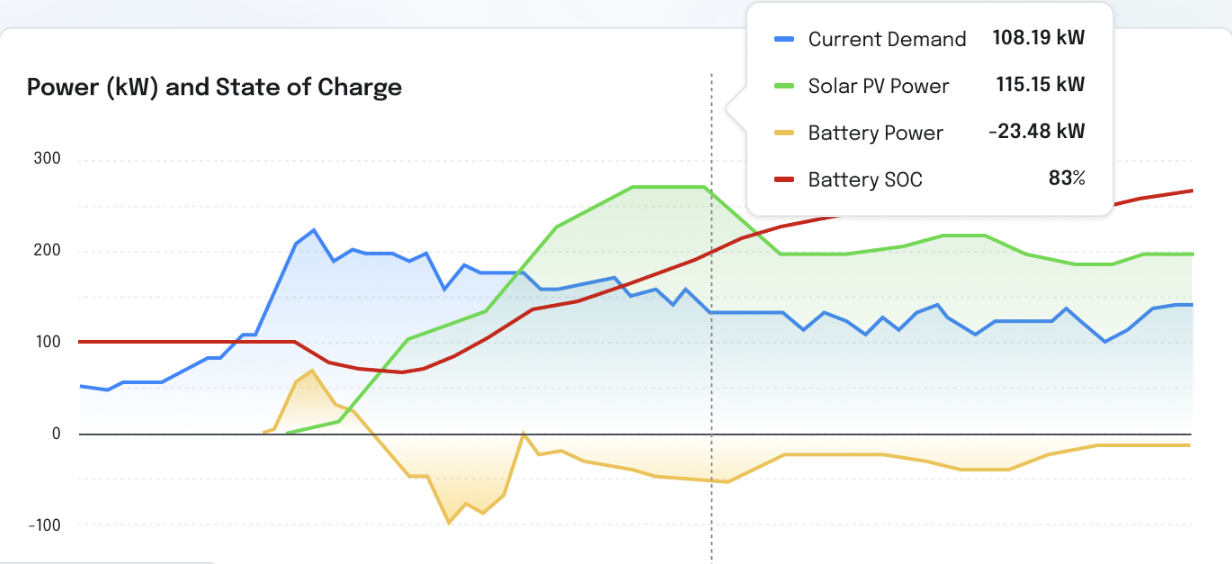
Energy Toolbase focuses heavily on solar and energy storage modeling, making it a good choice for teams that need detailed financial analysis and accurate project economics. It’s especially useful for commercial solar and storage projects where utility rates, incentives, and ROI calculations play a major role in the proposal process.
That said, for simpler solar proposals handled by scaling teams, Proposify offers a more practical, manageable solution.
Key Features
- Financial Analysis Tools: Accurately model utility costs, savings, and project economics.
- Energy Storage Simulation: Simulate solar and battery storage performance in different scenarios.
- Custom Proposal Templates: Create branded proposal documents for clients.
- Custom Rate Schedules: Build utility rate and incentive structures tailored to your needs.
Pricing
Energy Toolbase offers two plans: i) the Lite plan (starting at $170/user/month,) and ii) the Standard plan at $224/user/month. Both plans are billed annually and include a free trial with no credit card required.
Pros
- Strong financial and utility rate analysis tools
- Great for commercial solar and storage projects
- Accurate modeling for complex energy scenarios
- Supports advanced energy storage simulations
- Helpful customer support and onboarding
Cons
- Better suited for technical and commercial workflows than simple residential proposals
- Can feel overwhelming for smaller sales teams
- Higher pricing compared to some proposal-focused platforms
8. SurgePV
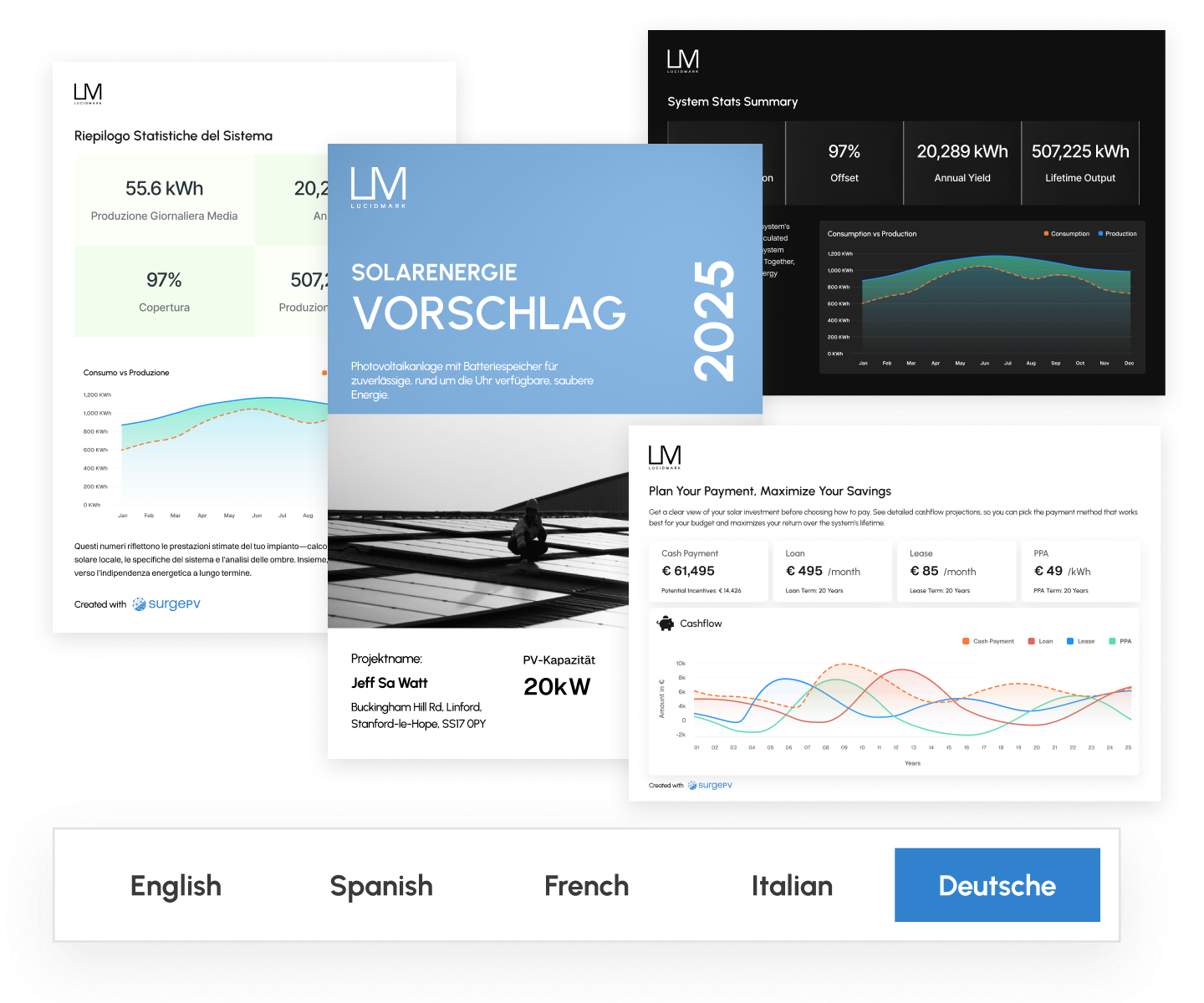
SurgePV uses AI to streamline solar project development from roof modeling to proposals. It’s built for installers and EPCs that want one place to handle design, analysis, and client proposals. But it lacks advanced proposal customization, branding controls, and client engagement tracking, which more sales-focused teams typically need.
Key Features
- Smart Proposal Design: Generate accurate 3D roof models from an address using the Clara AI copilot for design and workflow support.
- Shadow Analysis: Run shade studies and irradiance mapping.
- Financial Modeling: Model CAPEX, LCOE, NPV, IRR, and payback.
- White-Label Proposals: Create branded proposals with BOMs and 3D visuals.
Pricing
There are four plans:
- Individual Plan ($1,899/user/year): Includes 3D embedded designing and shadow analysis.
- 3-User Plan ($1,499/user/year): Includes AI solar designing, priority features, and DC stringing.
- 5-User Plan ($1,299/user/year): Adds roadmap access and direct support.
- Enterprise Plan (Custom): Includes unlimited users, volume discounts, dedicated account management, and custom onboarding.
Pros
- Strong AI-assisted design and roof modeling
- Good fit for installers and EPCs managing multiple projects
- Includes design, simulation, financials, and proposals in one workflow
- Unlimited projects on every plan
- Free onboarding and direct support included
Cons
- Component library may need more depth
- Energy yield calculations may not always match PVsyst
- May still need tools like AutoCAD or PVsyst for some advanced workflows
Solar Proposal Software Pricing Comparison
Here’s a side-by-side breakdown of how the top solar proposal software platforms compare on pricing:
|
# |
Software |
Starting Price |
Free Plan/Trial |
Pricing Model |
|
1 |
Proposify |
$35/user/mo (annual) |
14-day free trial |
Per user/month |
|
2 |
Solargraf |
$2,799/year |
Free trial |
Annual plans by projects/users |
|
3 |
Aurora |
$159/user/month |
Free trial |
Per user/month |
|
4 |
HelioScope |
$159/license/month |
Free trial |
Per license/month |
|
5 |
Sunbase |
$59/user/month |
Demo available |
Per user/month |
|
6 |
OpenSolar |
Free |
Free plan available |
Free platform |
|
7 |
Energy Toolbase |
$170/user/month |
Free trial |
Per user/month |
|
8 |
SurgePV |
$1,299/user/year |
Free trial |
Annual per user |
How We Evaluated Each Software
To create this list, we assessed how well each platform supports the entire solar proposal workflow, from design and financial modeling to proposal creation and project coordination. These were some of the key questions considered during the evaluation process:
- How comprehensive are the proposal features? This included branding, interactive pricing tables, e-signatures, customization options, and overall client experience.
- How strong are the solar design capabilities? System layouts, shading analysis, energy modeling, financial projections, and proposal accuracy all played a role.
- How easy is the platform to use day to day? Especially for teams managing multiple proposals, installations, and client workflows.
- Does it actually improve workflow efficiency? Automation, CRM integrations, permitting, scheduling, approvals, and project coordination were all considered.
- What are real users saying about it? Customer reviews, usability feedback, support quality, and overall reputation within the solar industry were also factored in.
The goal was to include platforms that fit different solar workflows, whether you’re focused on residential sales, commercial installations, permitting, or large-scale EPC projects.
What Is Solar Proposal Software?
Solar proposal software helps solar businesses create, manage, and send professional proposals more efficiently. Instead of building proposals manually using spreadsheets, PDFs, and separate design tools, these platforms bring everything into one workflow.
Depending on the software, you can create system designs, calculate energy savings, model financing options, generate proposals, collect e-signatures, and track client engagement all in one place. For solar sales teams and installers, this reduces manual work, improves proposal accuracy, speeds up approvals, and creates a better experience for clients.
How to Choose the Right Solar Proposal Software
The right solar proposal software should fit the way your team already works, not force you to rebuild your entire process around the tool.
For some solar businesses, speed and proposal presentation matter most, while others prioritize advanced solar design, financial modeling, permitting, or project management. The key is knowing where your current workflow slows down and choosing software that actually solves that problem.
For example:
- If your team spends too much time manually building proposals, look for stronger automation and templates.
- If proposal follow-up is inconsistent, features like real-time tracking and client engagement insights can help.
- If you handle more complex commercial projects, advanced modeling and shading analysis are likely to be more important.
- If your workflow feels scattered across multiple tools, an all-in-one platform may make more sense.
It’s also important to think long term. A platform that works for a small sales team today may not support your workflow as your project volume, team size, or service offerings grow.
Ready to Close More Solar Deals?
Solar proposal software helps your team respond faster, present projects more clearly, and move deals forward with less friction.
If you’re looking for the best solar proposal software to close more deals, Proposify is your solution. With interactive proposals, real-time tracking, customizable templates, and CRM integrations, Proposify helps simplify your proposal workflow so your sales team can focus more on selling.
Frequently Asked Questions
1. How long does it take to create a solar proposal?
That depends on the project’s complexity and the software you use. On average, proposals created with Proposify are completed in 17 minutes or less. This means your solar teams move faster without sacrificing professionalism or accuracy.
2. Why should I use solar proposal software instead of spreadsheets and PDFs?
Most modern solar proposal platforms combine proposal generation, pricing, e-signatures, client tracking, and workflow management in one place. This reduces the need for errors, disconnected data, and the usual back-and-forth manual spreadsheets and static PDF proposals.
3. What is the best solar proposal software for closing deals in 2026?
Proposify. Unlike other tools, it combines design flexibility, granular permission controls, and comprehensive engagement analytics in one platform. Plans start at $19/month with no hidden costs and responsive, human customer support available across all plans.
4. What features should I look for in solar proposal software?
Some of the most important features include proposal customization, solar design tools, financial modeling, CRM integrations, e-signatures, workflow automation, and real-time proposal tracking.
5. Does solar proposal software integrate with CRM tools?
Yes. Many solar proposal platforms integrate with CRMs, financing tools, and project management software to reduce manual work and keep sales workflows organized. Proposify connects with over 20 CRMs, including Salesforce and HubSpot, so client data flows directly into proposals without manual entry.