








Published: October 16, 2026
Updated: October 16, 2026


Quick Summary
Proposify is the best proposal software pick for marketing agencies in 2026, leading in brand control, engagement analytics, and CRM integrations from $19/user/month. PandaDoc and Qwilr round out the top three, with seven more tools covering niches like retainer billing, all-in-one client management, and budget-friendly entry options.
Looking for the Right Proposal Software for Your Agency?
Constant back and forth with clients, manual errors that slow every deal down, and deals that go dark the moment you hit send. This is the reality for many marketing agencies still relying on manual processes. The right proposal software fixes this, but only if you choose the right one.
This article compares ten of the best proposal software for marketing agencies. We break down each tool’s features, pricing, pros, and cons to help you choose the right fit. We also show why Proposify is a strong choice for agency teams of any size.
Why Listen to Us
At Proposify, we’ve helped over 8,000 companies improve their close rates. We have seen what slows teams down and what helps them close faster.
This guide pulls together market research, customer feedback, and hands-on experience so you can choose with confidence.
Benefits of Using Proposal Software for Marketing Agencies
Here are a few ways proposal software helps marketing agencies, especially those juggling multiple client pitches at once:
- Faster Turnaround: Proposal software often features reusable templates and content libraries that let you assemble pitches in minutes instead of hours.
- Stronger Brand Alignment: Marketing agencies can use proposal software to lock down fonts, colors, and approved messaging so every proposal looks polished and on-brand.
- Clear Engagement Insights: Proposal software shows exactly when prospects open your proposal and which sections they spend the most time on. This lets you base follow ups on real engagement data, not guesswork.
- Fewer errors: With proposal software, you can pull pricing and client details from your CRM. This reduces the occurrence of wrong names, outdated rates, or copy-paste mistakes.
- Shorter sales cycles: Proposal platforms have built-in e-signatures and interactive pricing that let prospects approve and sign without extra steps.
Top 10 Proposal Software Tools for Marketing Agencies
Here’s a quick side-by-side of all ten tools.
|
# |
Tool |
Starting Price |
Key Features |
Best For |
G2 Rating |
Trial |
|
1 |
Proposify |
$35/user/mo (annual) |
Drag-and-Drop template editor, centralized content library, smart approval workflows, AI proposal generator |
Mid-market sales teams that need agency brand control and insights at scale |
4.6 |
14 days |
|
2 |
PandaDoc |
$19/seat/mo |
Reusable template library, document analytics |
All-in-one document workflows |
4.7 |
14 days |
|
3 |
Qwilr |
$35/user/mo |
Web-based proposals, dynamic pricing tables |
Interactive proposal experiences |
4.6 |
14 days |
|
4 |
Better Proposals |
$13/user/mo |
Template marketplace, real-time notifications |
Small agency teams |
4.3 |
14 days |
|
5 |
Nusii |
$29/mo |
Reusable blocks, optional pricing packages |
Creative agencies and freelancers that want simplicity |
4.5 |
14 days |
|
6 |
HoneyBook |
$29/mo |
All-in-one client management, automated workflows |
Solo agencies with low proposal volume |
4.4 |
30 days |
|
7 |
Ignition |
$39/mo |
Automated payment processing, AI-driven price insights |
Retainer-based agency billing |
4.7 |
14 days |
|
8 |
GetAccept |
$25/user/mo |
Digital sales rooms, video messaging |
Relationship-driven sales cycles |
4.6 |
14 days |
|
9 |
Prospero |
$12/user/mo |
AI writing, templates, analytics |
Budget-conscious teams |
4.8 |
14 days |
|
10 |
Proposable |
$19/user/mo |
Sales content library, real-time team dashboard |
Mid-market balanced option |
4.2 |
Free trial |
Now, let us look at each tool in detail.
1. Proposify
Proposify is cloud-based proposal software built to help marketing agencies move from first draft to signed agreement without the back-and-forth. With our platform, you can create polished, branded proposals in minutes, keep everything organized, and give prospects a smoother experience.
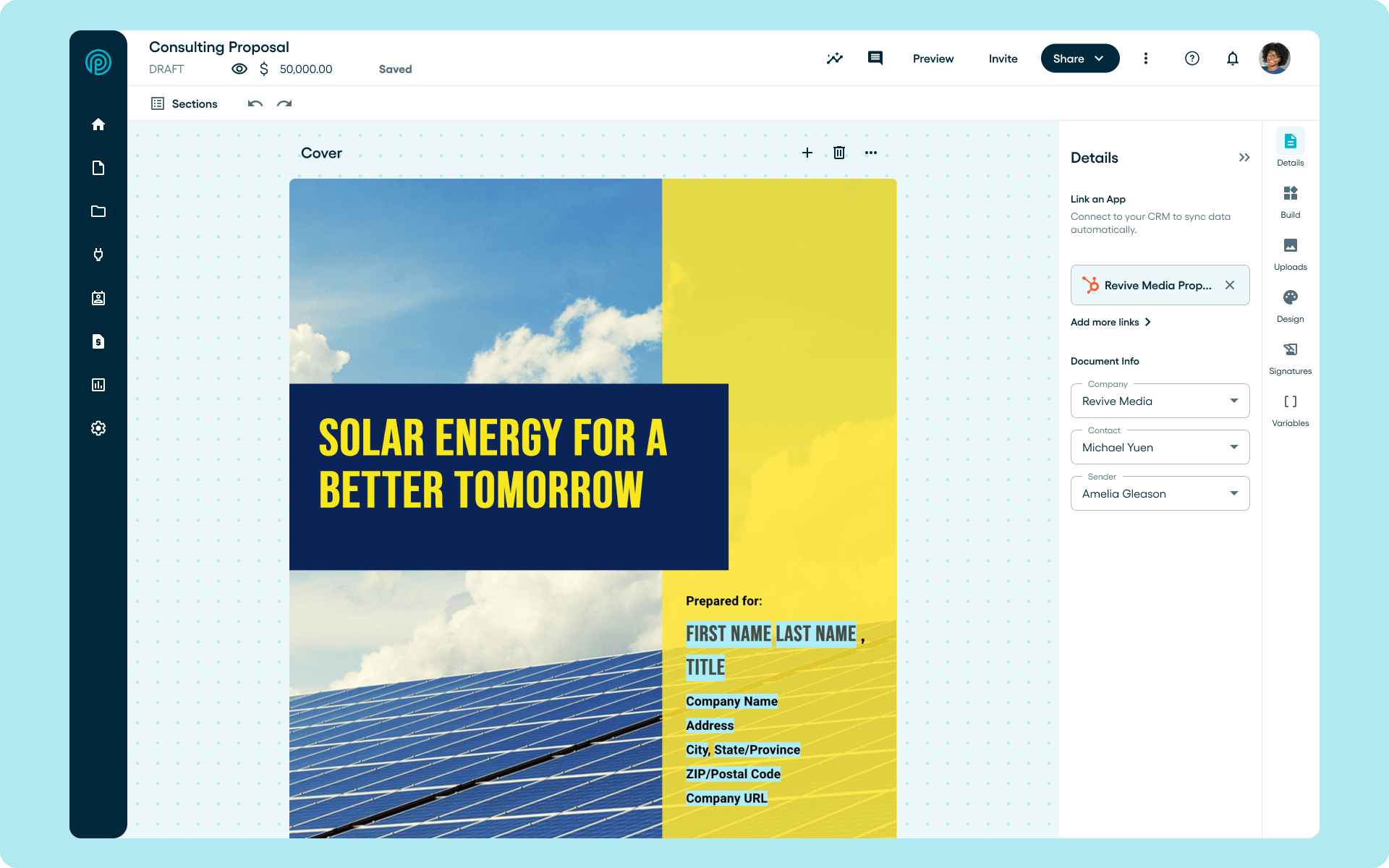
Proposify integrates with Salesforce, HubSpot, and other CRMs so your sales data always stays in sync. It also includes native e-signatures and engagement tracking that captures opens, views, and time spent on each section.
Unlike document-sending tools, Proposify focuses on visibility into proposal activity rather than just delivery. You can see how your proposals perform, including who viewed them, which sections received the most attention, and where engagement dropped off. You can then review this interaction data and decide your next steps based on your own sales process.
Key Features
- Drag-and-Drop Template Editor: Create on-brand proposals that reps can reuse and quickly personalize using customizable templates and reusable content blocks.
- Centralized Content Library: Store approved case studies, pricing tables, and service descriptions in one place so reps can swiftly find what they need.
- Smart Approval Workflows: Route edits and sending permissions through automated approval steps based on set rules, eliminating bottlenecks.
- Role-Based Permissions: Lock down pricing, terms, and brand elements while selectively granting team members access based on their roles and groups.
- Interactive Pricing: Prospects can adjust quantities and see totals update in real time, with a transparent view of price adjustments, reducing back-and-forth revisions.
- Real-Time Engagement Analytics: You can see who viewed your proposal, what sections they spent the most time on with real-time tracking.
Pricing
Proposify has three pricing tiers:
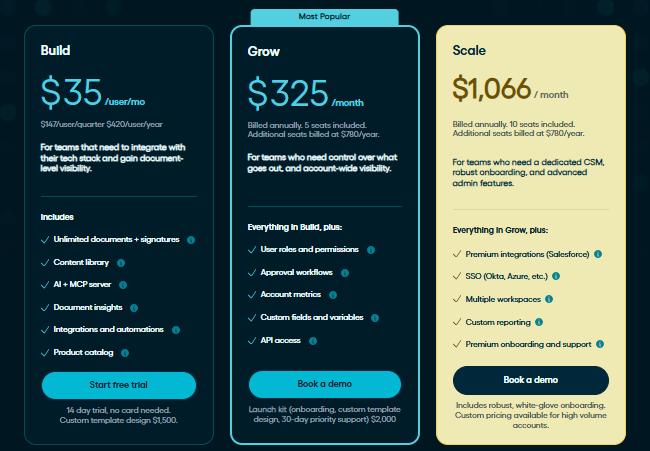
- Build ($35/user/month, billed annually): Includes a content library, document analytics, AI tools, integrations, and e-signatures. Quarterly billing is available at $49/user/month.
- Grow ($325/month, billed annually; five seats included): Adds approval workflows, user roles and permissions, account metrics, and API access.
- Scale (approximately $1,066/month, billed annually at $12,792; 10 seats included): Adds SSO, multiple workspaces, custom reporting, and premium onboarding and support.
Additional Grow and Scale seats cost $65 per seat per month, billed annually. Check our pricing page for a detailed plan comparison.
Trial Details
All plans include a 14-day free trial. No credit card required.
Pros
- Professional, branded proposals that stand out from the competition
- Real-time engagement analytics that show how prospects interact with your proposals
- Integrates with over 40 CRMs keeping your sales stack connected
- Done-for-you setup with custom templates and onboarding support
- Responsive customer support with real human assistance
- Collaboration tools with shared editing and role-based access for teams
Cons
- Works best on desktop
2. PandaDoc
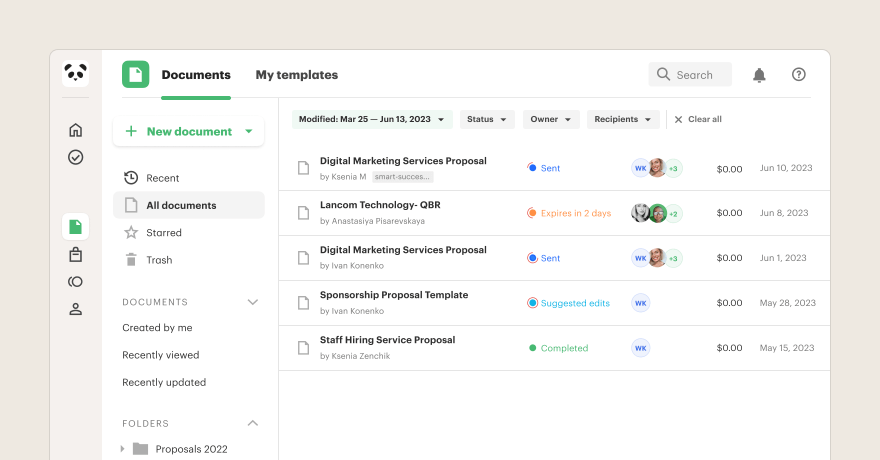
PandaDoc is a document automation platform that handles proposals, contracts, and quotes. It features a robust content library, analytics dashboard, and CPQ (Configure, Price, Quote) functionality on its Enterprise plan, making it useful for agencies with complex pricing models.
Key Features
- Reusable Template Library: Includes pre-built proposal templates that can be saved, customized, and stored for reuse across the team.
- Document Analytics: Tracking that shows open, view, and sign activity on every document.
- Automated Workflows: Streamline internal sign-off processes with automated approval workflows that remove bottlenecks and keep deals moving forward.
- Payment Collection: Accept payments via Stripe, PayPal, and Square directly within proposals.
Pricing
PandaDoc has four plans available:
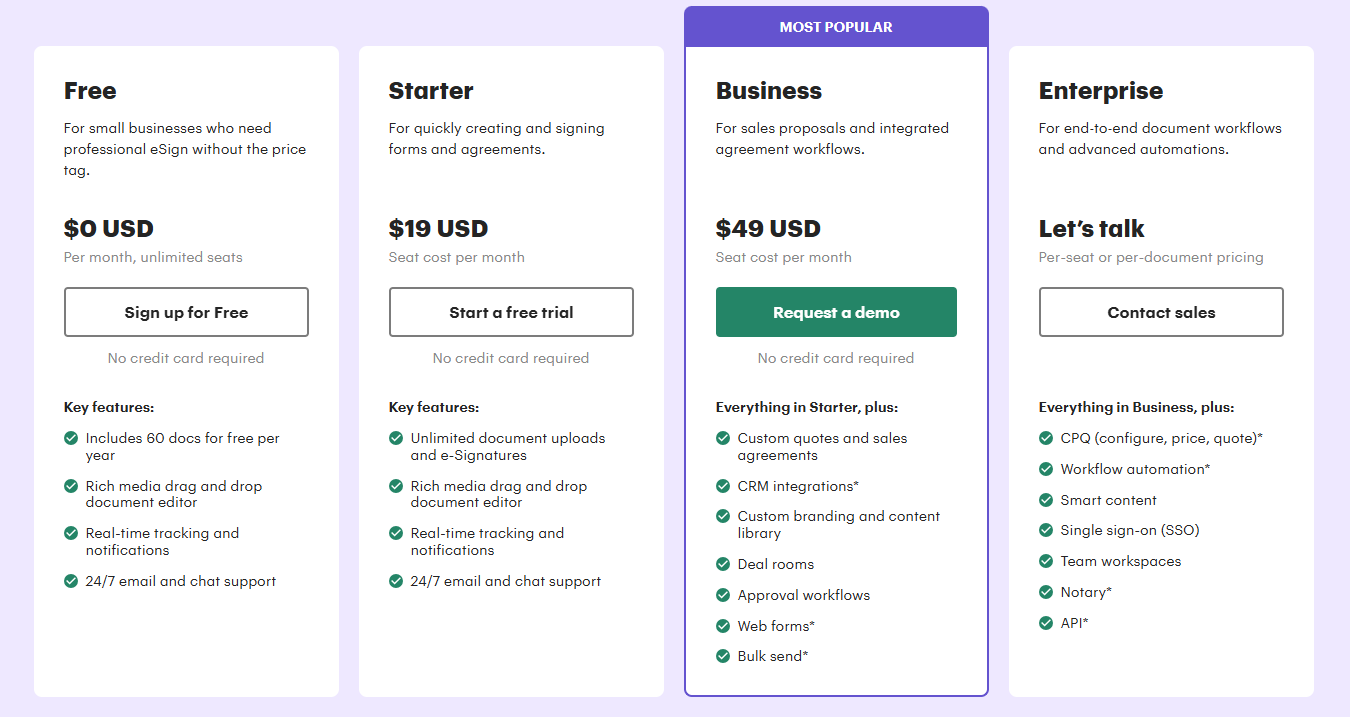
- Free Plan: Unlimited signatures, with up to five document uploads and sends per month.
- Starter ($19/seat/month): Unlimited document uploads, e-signing, and an intuitive document builder.
- Business ($49/seat/month): Adds CRM integrations, custom branding, and approval workflows.
- Enterprise (Custom): Advanced automation, API access, SSO, and dedicated support.
Trial
14-day free trial available.
Pros
- Large template library that’s suitable for most agency use cases
- Strong document workflow automation
- Free eSign plan covers essential e-signatures
Cons
- Interface can feel overwhelming for smaller teams
- Pricing gets complicated with paid add-ons and feature gates
3. Qwilr
Qwilr turns prposals into into interactive web pages that prospects view proposals as branded microsites. These pages can include embedded video, dynamic pricing tables, and accept buttons, making them more engaging than static PDFs.
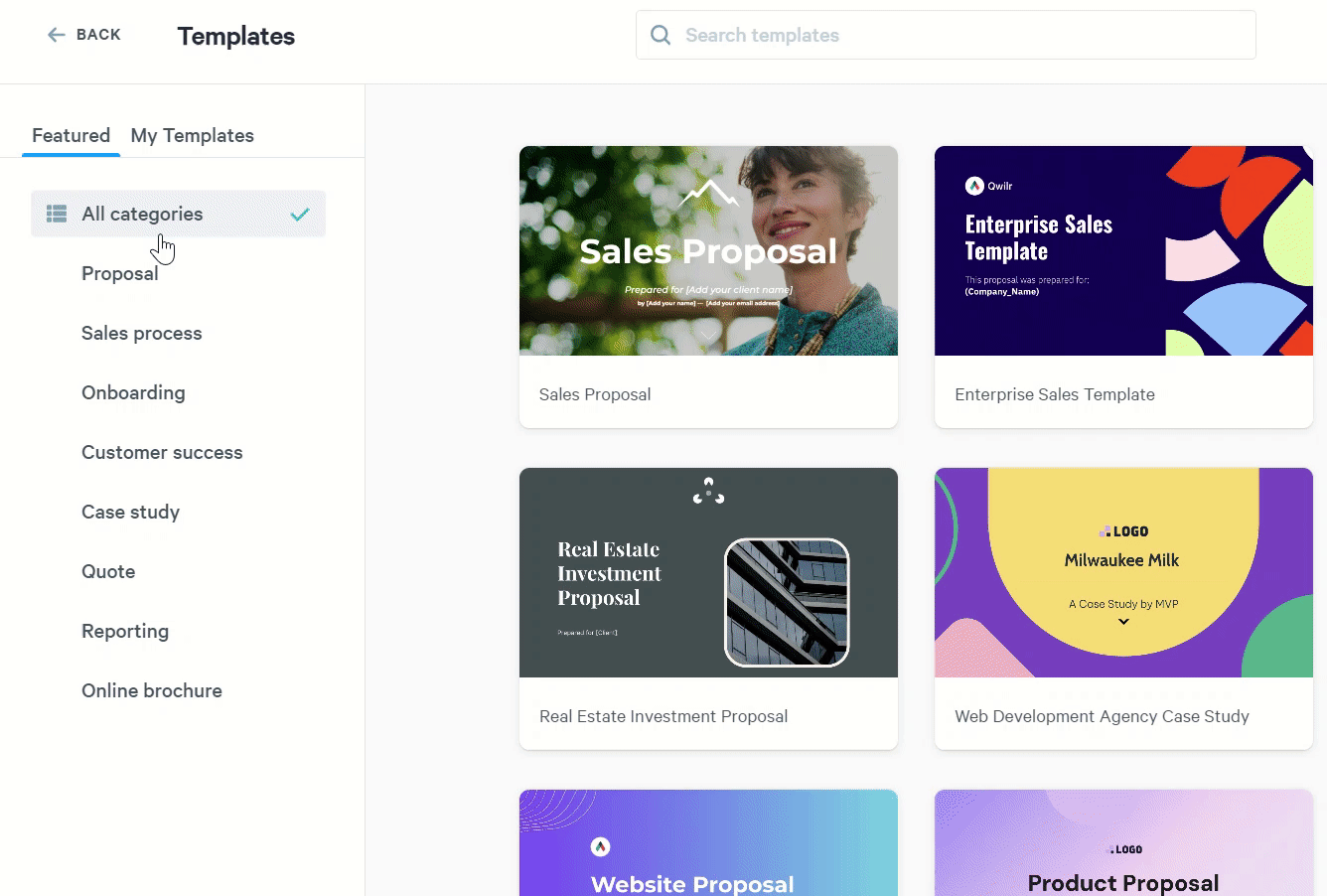
For design-conscious marketing agencies, Qwilr delivers a polished client experience. However, the document editor comes with a steeper learning curve than other tools.
Key Features
- Interactive Proposals: Web-based documents that feel like microsites rather than static PDFs.
- Dynamic Pricing Tables: Accept buttons and interactive pricing options built into the proposal.
- Modular Templates: Custom branding with drag-and-drop block-based editing.
- Real-Time Analytics: Track views, time spent, and interaction data in real time.
Pricing
Qwilr offers two pricing tiers:
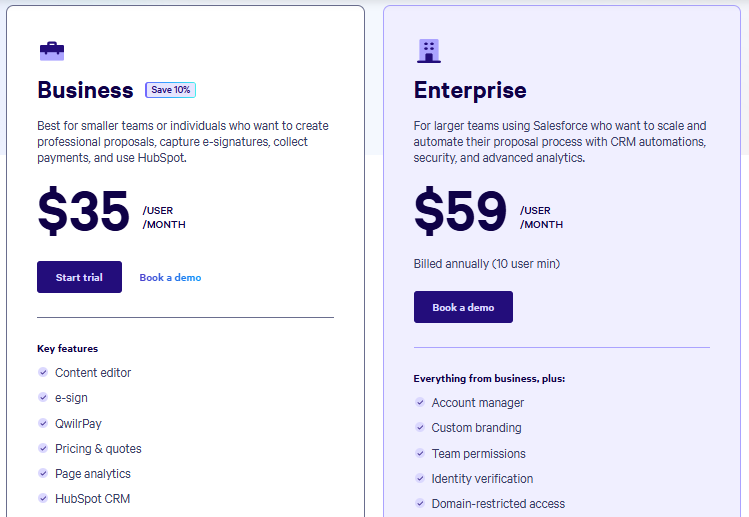
- Business ($35/user/month): Core features for small teams, includes HubSpot integration.
- Enterprise ($59/user): Adds Salesforce integration, advanced security, and dedicated support.
Trial
Qwilr offers a free 14-day trial for users to test the platform.
Pros
- Produces modern-looking and visually impressive proposals on any device
- Custom templates that fit different sales scenarios
- Interactive pricing options available
Cons
- Expensive especially for smaller agencies
- Limited reporting features
4. Better Proposals
Better Proposals helps agencies create professional and mobile-friendly business proposals. It features a document editor, along with a set of pre-designed templates and e-signature capabilities, making it fast and easy for teams to create proposals.
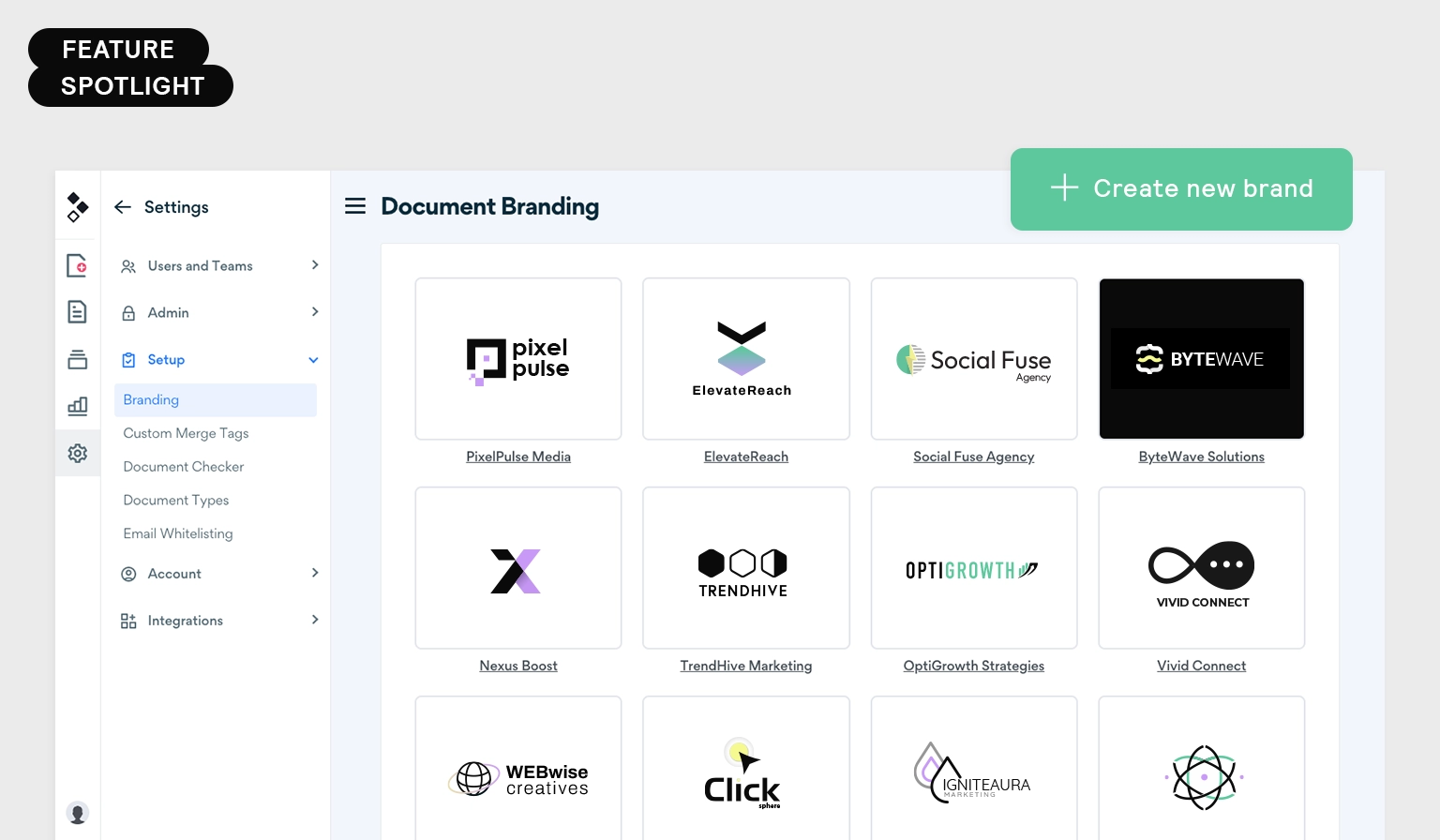
Better Proposals is known for its human support with no chatbots or AI responses. Compared to Proposify, however, it is less comprehensive. Proposify offers best-in-class human support, backed by a stronger knowledge base, onboarding resources, and a customer success team, making it ideal for complex workflows.
Key Features
- Template Marketplace: Includes a large selection of pre-designed, mobile-responsive templates across multiple industries.
- Real-Time Notifications: Instant alerts when prospects open, view, forward, or sign your proposal.
- Built-In Live Chat: Prospects can ask questions directly within the proposal without having to leave the document.
- Integrated E-Signatures and Payments: Digital signatures and payment collection are included in one platform.
Pricing
There are four pricing options available:
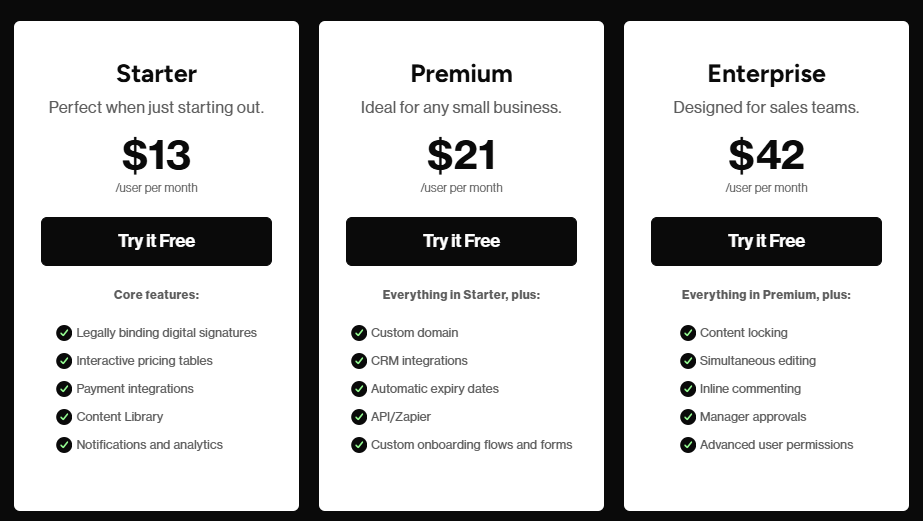
- Starter ($13/month): 1 user, 10 sends/month, e-signatures, and basic analytics.
- Premium ($21/month): 50 sends/month, CRM integrations, custom domain, and Zapier.
- Enterprise ($42/month): Unlimited sends, content locking, manager approvals, and white-label.
Trial
A free 14-day trial is available.
Pros
- Fast setup with a minimal learning curve
- Clean, mobile-friendly proposal experience for clients
- Responsive customer support
Cons
- CRM integrations and Zapier are locked behind the Premium plan
- Lacks advanced features like approval workflows or granular permission controls
5. Nusii
Nusii is built specifically for creative agencies and freelancers who want to send polished proposals without fighting complex software. It features reusable content blocks and supports multiple languages and currencies, making it useful for agencies with international clients.
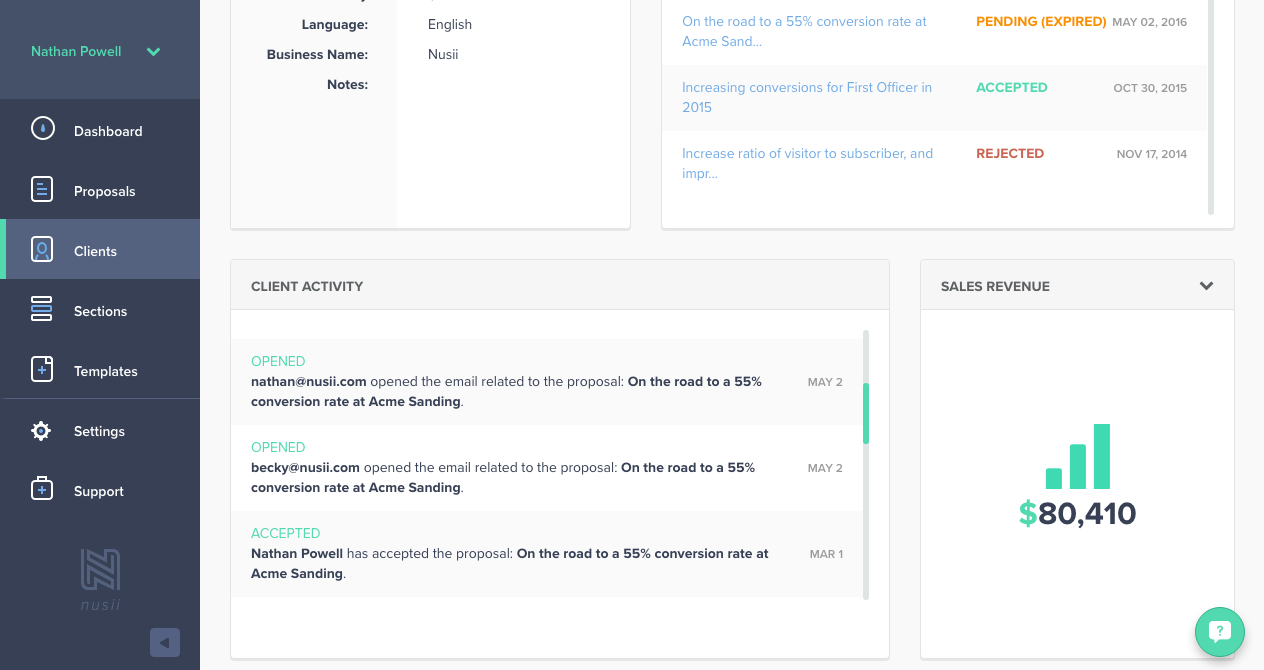
Key Features
- Reusable Content Blocks: Users can save and reuse sections across proposals, maintaining brand consistency across pitches.
- Optional Pricing Packages: Offer tiered pricing options so clients can choose what suits them.
- Proposal Tracking: Get notified when clients open, view, or accept your proposal.
- Custom Branding: Add your own domain, logo, and email so clients never see the Nusii brand.
Pricing
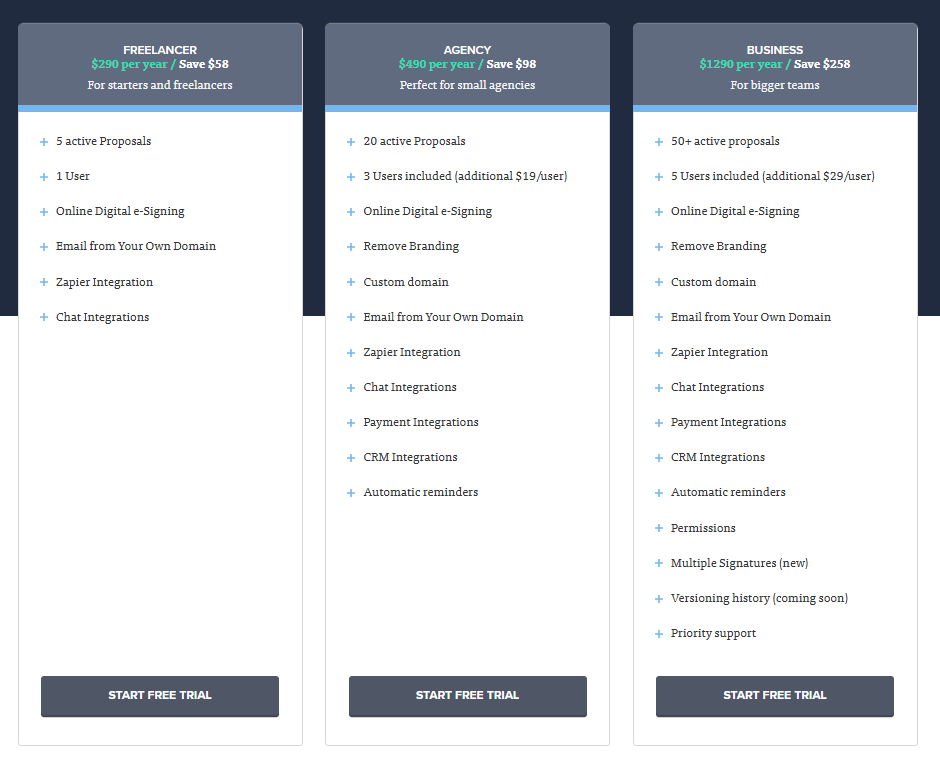
- Freelancer ($29/month): Up to 5 active proposals, with unlimited templates and clients. Includes Nusii branding on all documents.
- Agency ($49/month): Unlimited users and up to 20 active proposals, with custom branding and CRM integrations.
- Business ($129/month): 50+ active proposals, advanced permissions, priority customer service, and payment integrations.
Trial
Nusii offers a 14-day free trial for agencies looking to test the platform.
Pros
- Low learning curve with minimal onboarding needed
- Affordable option for small creative teams
- Multi-language and multi-currency support for international agencies
Cons
- Editor is less powerful than competitors
- Not ideal if you need advanced reporting or workflows
6. HoneyBook
HoneyBook is a clientflow management platform built for independent service businesses. It combines proposals, contracts, invoices, scheduling, and project management into one platform.
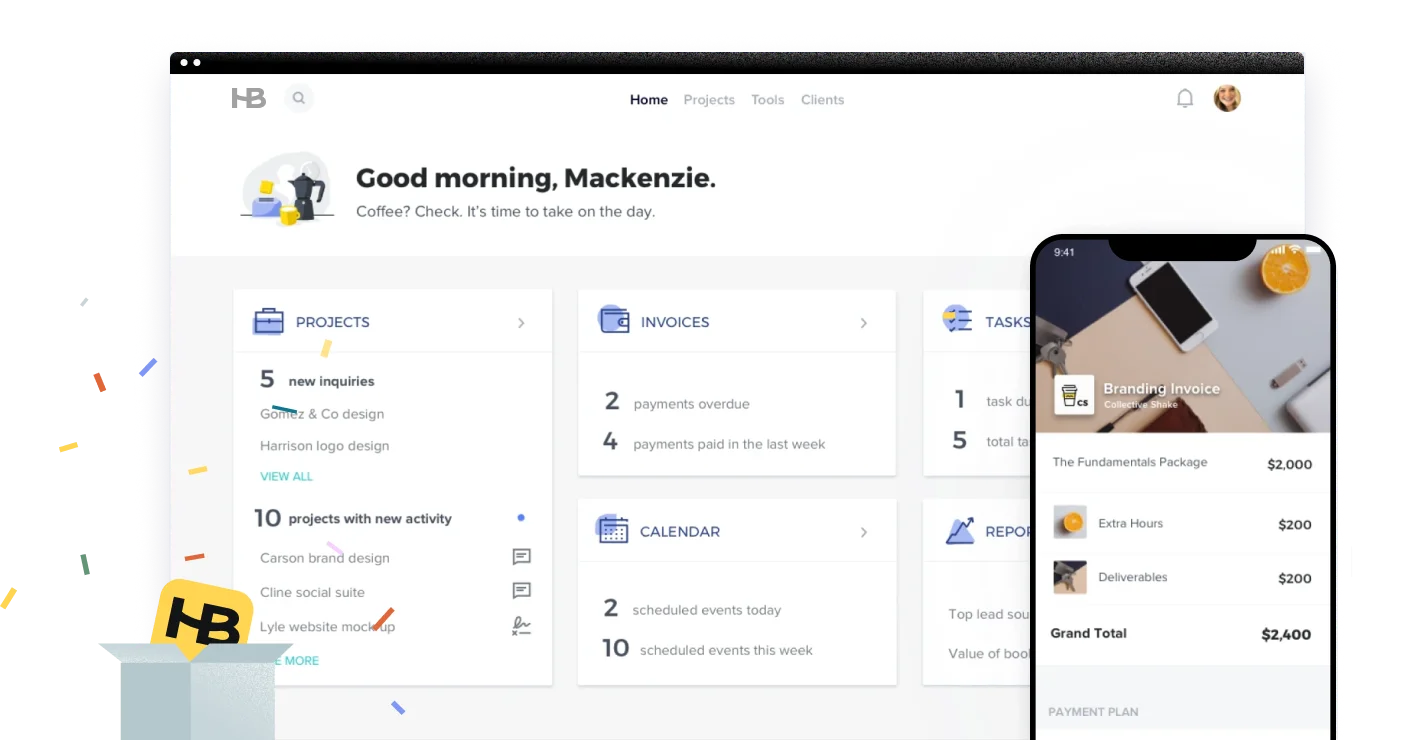
It is popular with boutique marketing agencies and creative professionals who want a single tool for the entire client lifecycle. That said, proposals are not its core strength. Users frequently cite limited template customization and a complex automation setup, making it not ideal for teams sending a high volume of tailored, client-facing proposals.
Key Features
- All-in-One Client Management: Proposals, contracts, invoices, scheduling, and projects in a single platform.
- Automated Workflows: Set up follow-up sequences, task assignments, and reminders automatically.
- Branded Client Portal: Branded space for communication and file sharing with clients.
- AI-Powered Proposal Tools: Draft emails, generate proposals, and speed up content creation using AI assistance.
Pricing
HoneyBook is available across three plans:
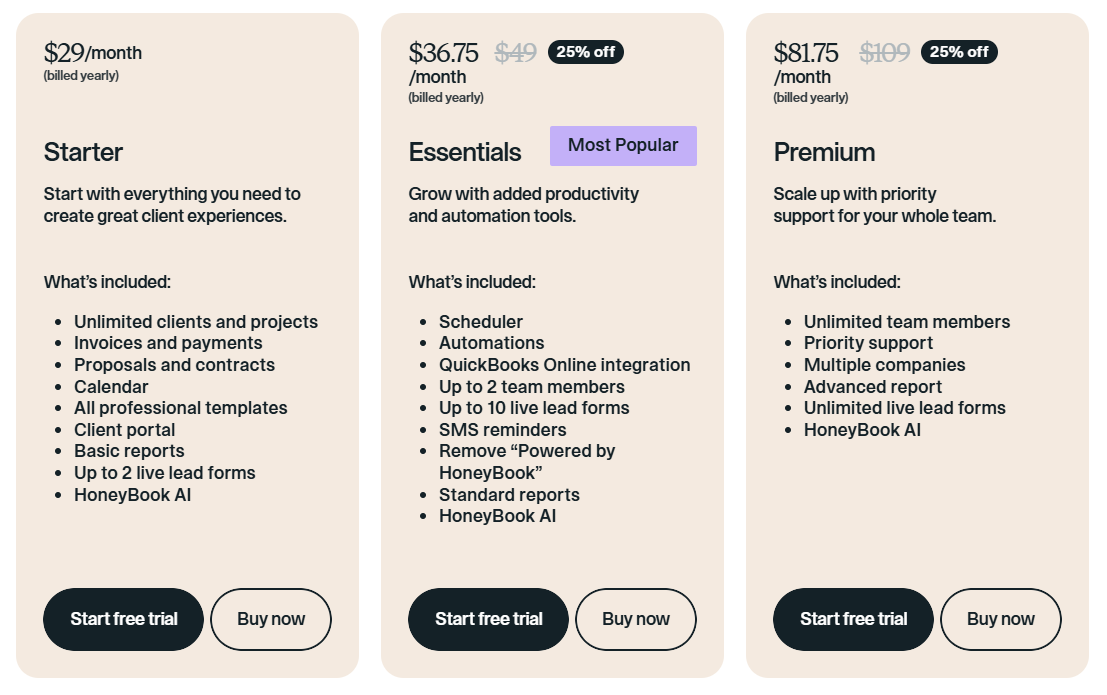
- Starter ($29/month): Core features for solo users, includes templates and payments.
- Essentials ($36.75/month): Adds automation, Zapier integration, and up to 2 team members.
- Premium ($81.75/month): Unlimited team members, advanced reporting, and priority customer support.
Trial
HoneyBook offers a 30-day free trial for interested users.
Pros
- Consolidates multiple tools into one platform
- Clean, intuitive interface for non-technical users
- AI features help speed up quoting and client communication
Cons
- Limited design customization options
- Not built for complex, multi-stakeholder sales
7. Ignition
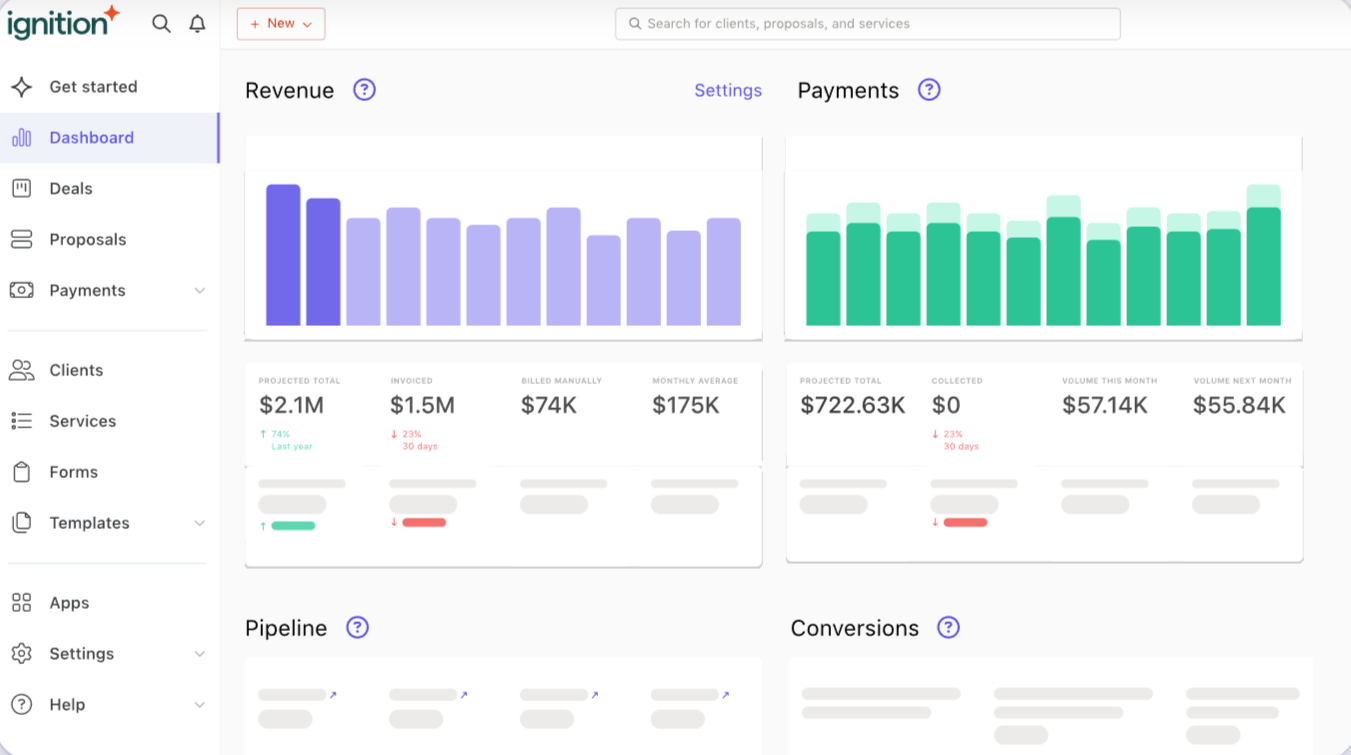
Iginition combines proposals, client agreements, and automated billing into a single workflow. It is particularly strong for agencies that bill on retainers or recurring service agreements.
Key Features
- Automated Payment Processing: Trigger billing and invoicing automatically the moment a proposal is accepted.
- AI-Driven Price Insights: Access Intelligent pricing recommendations based on industry benchmarks to help your team quote with confidence.
- Flexible Recurring Billing: Set up automated retainer invoicing and payment collection.
- Native Accounting Integrations: Connect directly with Xero, QuickBooks, and other accounting tools to keep your financials accurate and up to date.
Pricing
Four tiers are available:
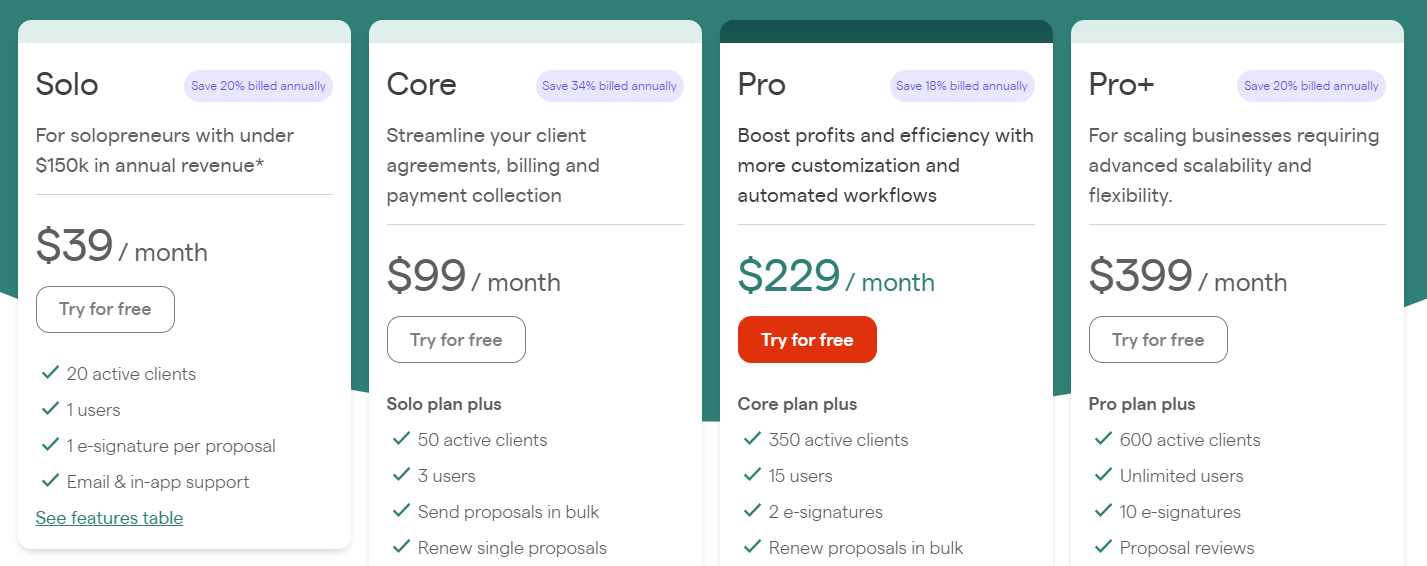
- Solo ($39/month): 1 user, proposals, e-signatures, and basic billing.
- Core ($99/month): Supports up to 3 users and adds CRM integrations and advanced billing.
- Pro ($299/month): Up to 15 users, white-labeling, Zapier, and multi-signature support.
- Pro+ ($399/month): Unlimited users, 10 e-signatures, custom reporting & priority customer support.
Trial
A 14-day free trial is available.
Pros
- Eliminates manual billing
- Strong fit for retainer and recurring-revenue agency models
- Seamless client onboarding once proposals are accepted
Cons
- Limited design options when compared to dedicated builders like Proposify
- Less suited for project-based or one-off proposal workflows
8. GetAccept
GetAccept is a digital sales room platform that goes beyond traditional proposals. It combines document creation with video messaging and engagement tracking in a single buyer-facing environment.
For agencies with longer, relationship-driven sales cycles, the video personalization and mutual action plans can be quite useful. However, the platform's seat-based pricing can make scaling to larger teams costly.
Key Features
- Digital Sales Rooms: Shared spaces with proposals, video, documents, and chat in one hub.
- Video Messaging: Record and embed personalized video introductions directly in proposals.
- Mutual Action Plans: Collaborative deal plans for managing complex, multi-stakeholder processes.
- CPQ Functionality: Configure, Price, Quote tools for accurate, error-free quoting.
Pricing
GetAccept has three pricing plans:
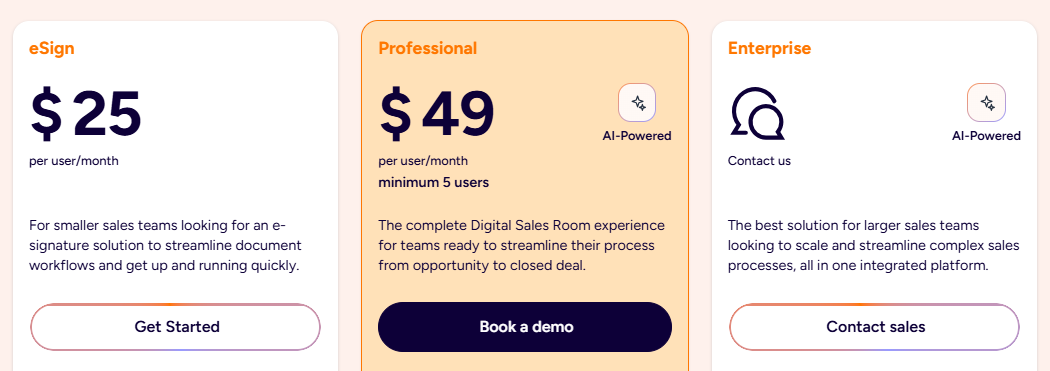
- eSign ($25/user/month): Digital signatures and simplified document management.
- Professional ($49/user/month): Full proposal creation, CRM integrations, and engagement tracking.
- Enterprise (Custom): Advanced features for larger sales teams with custom pricing.
Trial
GetAccept offers a 14-day free trial to test out the platform’s features.
Pros
- Video and chat features create a more personal buyer experience
- Strong analytics on document and sales room engagement
- Comprehensive deal management beyond just proposals
Cons
- Added complexity may overwhelm agencies with straightforward proposal needs
- Higher learning curve than simpler tools
9. Prospero
Prospero is a budget-friendly proposal tool designed for agencies and freelancers who want professional proposals without a high price tag. It offers templates, a straightforward editor, AI assistance, and basic analytics.
Key Features
- Template Library: Pre-built templates with drag-and-drop editing for quick customization.
- Built-in AI Assistant: Helps teams generate proposal copy directly within the platform.
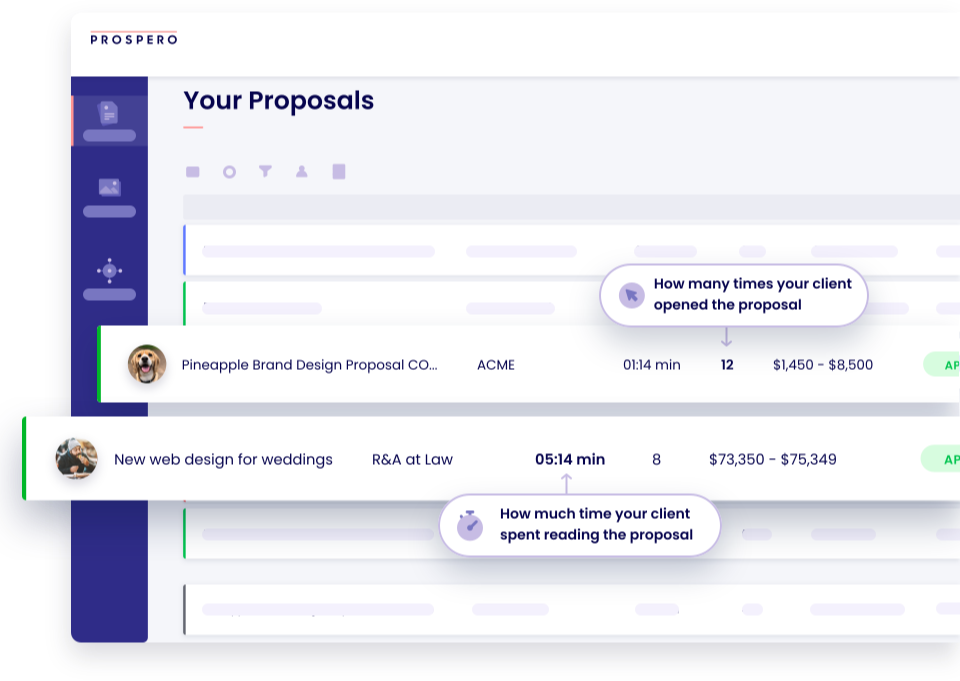
- Proposal Analytics: See who viewed your proposal, when, for how long, and from what device.
- Automated Reminders: Automatically sends follow-up emails to prospects who have not yet signed.
Pricing
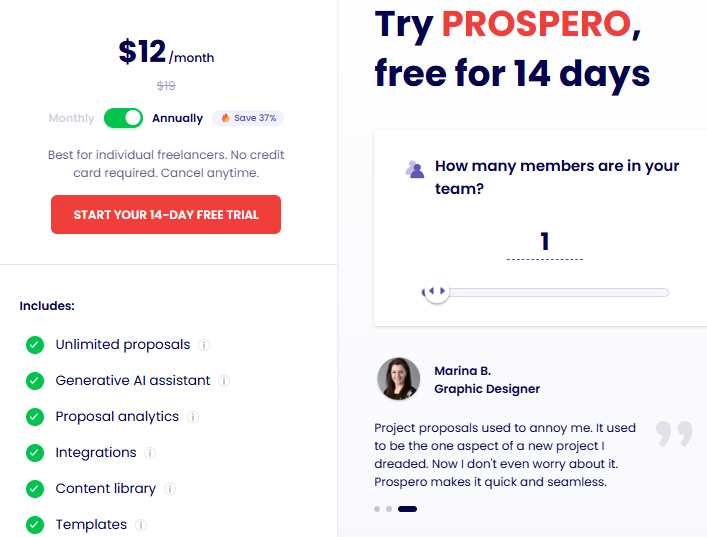
- Pro ($12/month): Single user, unlimited proposals, AI assistant, templates, and analytics.
- Team plans available with per-user pricing.
Trial
A free trial is available for 14 days.
Pros
- Affordable entry point for agencies on a tight budget
- Speeds up proposal content creation
- Simple interface with a minimal learning curve
Cons
- Basic analytics compared to Proposify or PandaDoc
- Design customization is more restricted than premium tools
10. Proposable
Proposable is a mid-market proposal tool that balances simplicity with enough depth for growing teams. It offers a robust set of features, though the interface may be dated when compared to more modern alternatives.
Key Features
- Sales Content Library: Store and reuse proposal sections, pricing blocks, and branded assets in one place.
- Real-Time Team Dashboard: Monitor live proposal performance across your entire sales team.
- Detailed Proposal Tracking: Receive notifications when prospects open, view, or interact with proposals.
- Native CRM Integrations: Connect directly with Salesforce and HubSpot to keep your proposal activity and sales data in sync.
Pricing
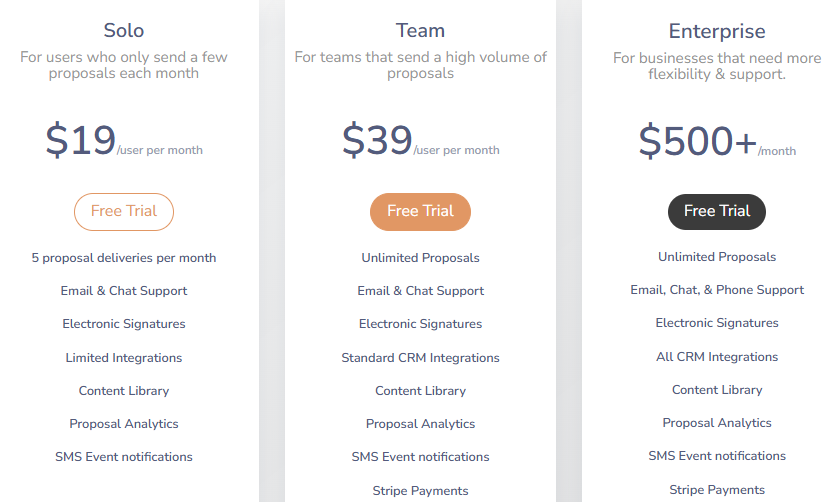
- Solo ($19/user/month): 5 proposal deliveries per month, content library, and email support.
- Team ($39/user/month): Unlimited proposals, e-signatures, custom URLs, and team stats.
- Enterprise ($500/month): API access, data export, and dedicated account manager.
Pros
- Good balance of features without enterprise-level complexity
- Built-in digital signatures on all paid plans
- Clean, intuitive editor for quick proposal creation
Cons
- Fewer templates and design options than Proposify or PandaDoc
- Smaller user community means fewer third-party resources and guides
Pricing Plan Comparison
Here is a quick pricing overview to compare costs. All prices shown reflect annual billing where available.
|
# |
Tool |
Entry Plan |
Mid Plan |
Top Plan |
|
1 |
Proposify |
Build: $35/user/mo (annual) |
Grow: $325/mo (annual; 5 seats) |
Scale: approx. $1,066/mo (annual; 10 seats) |
|
2 |
PandaDoc |
$19/user/mo (annual) |
$49/user/mo (annual) |
Custom (Enterprise) |
|
3 |
Qwilr |
$35/user/mo (annual) |
$59/user/mo (Enterprise) |
Contact sales |
|
4 |
Better Proposals |
$13/user/mo (annual) |
$21/user/mo (annual) |
$42/user/mo (annual) |
|
5 |
Nusii |
$29/mo (Freelancer) |
$49/mo (Agency) |
$129/mo (Business) |
|
6 |
HoneyBook |
$29/mo (annual) |
$36.75/mo (annual) |
$81.75/mo (annual) |
|
7 |
Ignition |
$39/mo (Solo) |
$99/mo (Core) |
$199/mo (Pro) |
|
8 |
GetAccept |
$25/user/mo (eSign) |
$49/user/mo (Pro) |
Custom (Enterprise) |
|
9 |
Prospero |
$12/user/mo (Pro) |
Team plans available |
Contact sales |
|
10 |
Proposable |
$19/user/mo (Solo) |
$39/user/mo (Team) |
$500/mo (Enterprise) |
How We Evaluated These Tools
Here’s a list of the factors we considered before picking each tool:
- Design flexibility: Can the tool produce proposals that reflect different client brands without rebuilding from scratch? Marketing agencies need multi-brand support, not one-size-fits-all templates.
- Engagement intelligence: Does the platform show how prospects interact with your proposal, or just whether they opened it? A robust proposal solution should include section-level analytics rather than basic open tracking.
- Scalability: How does the tool perform when five reps send 20 proposals a week across different client accounts? Collaboration, permissions, and CRM sync mattered the most to us here.
- Integration depth: A tool that syncs natively with Salesforce or HubSpot saves hours. We weighted native CRM integrations higher than Zapier-only connections.
- Total cost of ownership: We looked beyond the entry price. Some tools look affordable until you factor in per-user overages, limited sends, or paid add-ons for essential features.
What Is Proposal Software?
Proposal software is a tool that automates how you create, send, track, and close business proposals. Instead of stitching documents together in Word or Google Docs, you manage templates, pricing, content, and signatures in one platform.
For marketing agencies specifically, proposal software solves a unique set of challenges. Pitching SEO retainers, PPC campaigns, brand strategy packages, and social media management across multiple industries often happens in the same week. Proposal software ensures each pitch is tailored and accurately reflects the scope of work.
How to Choose the Right Proposal Software for Your Agency
Choosing the best software depends on how your team sells. Here are some questions to guide your decision:
- How many proposals do you send per month? Volume shapes everything. Low-volume teams can get by with a basic tool, but high-output agencies need more advanced features to keep up with demand.
- How important is design control? If proposals need to reflect your agency's creative standards, you should prioritize tools like Proposify with flexible editors and content libraries.
- What does your tech stack look like? Pick a tool that integrates natively with your CRM and workflow as manual data entry between disconnected tools slows your team down.
- Do you need approval workflows? If multiple stakeholders review proposals before they go out, look for role-based permissions and built-in approval systems. Proposify's approval workflows keep internal sign-off organized so nothing goes out before it's ready.
- What is your budget, including hidden costs? Compare total cost, not just starting price. Factor in per-user fees, send limits, and paid add-ons.
Close More Deals with Proposify
Your proposals are how clients decide whether to trust your agency with their budget. The right software makes you faster while keeping things more professional, consistent, and data driven.
If you need a solution built with marketing agencies in mind, Proposify is a strong fit. It offers design flexibility, clear engagement analytics, and team collaboration features, helping every deal move faster.
Ready to see how it works? Start your 14-day free trial or book a no-obligation demo with our sales team.
Frequently Asked Questions
1. What is the best proposal software for marketing agencies?
Proposify is the top choice for marketing agencies. It features design flexibility, real-time engagement analytics, and role-based permissions all at a $35/user/month. With Proposify, teams can create branded proposals while keeping pricing and content locked down.
2. Can proposal software integrate with my CRM?
Yes. Most tools integrate with popular CRMs. Proposify offers native CRM integrations with Salesforce, HubSpot, Zoho, and Pipedrive. So proposal data syncs directly with your existing sales stack.
3. How much does proposal software cost for agencies?
Pricing ranges widely. Lightweight tools start around $12 to $29 per month. More robust platforms, on the other hand, like Proposify start at $35/user/month (annual) with Grow and Scale plans for larger agencies.
4. Can I use proposal software even though my agency is small?
Yes. If your agency is sending proposals regularly, the manual approach gets unwieldy fast. Proposify is built for teams managing high volumes of proposals. It includes reusable templates, engagement analytics, and automated workflows to keep up with demand without sacrificing quality.
5. How long does it take to set up proposal software for marketing agencies?
Most tools can be set up within a day or two. Proposify offers done-for-you onboarding and custom template design services on higher-tier plans, so your team can hit the ground running without building everything from scratch.